

How NYC Defect Cases Turn on the Written Notice Rule
Key Takeaways: A Big Apple Pothole and Sidewalk Protection Map can prove New York City had prior written notice of a defect when it precisely marks the exact location and the City had fifteen days to repair after receiving notice. New York’s strict prior-written-notice rule under NYC Administrative Code § 7-201 generally requires the City to have received written notice of the specific hazard before your injury (the parallel rule for villages appears in CPLR 9804 and Village Law § 6-628). The map system works because GML § 50-g requires the City to keep indexed, location-based, publicly available defect records preserved for five years. Since 2003, NYC Administrative Code § 7-210 has shifted most sidewalk defect responsibility to the abutting property owner, so the City is usually liable only for roadway defects and sidewalks abutting owner-occupied one-, two-, or three-family homes. You must still prove the condition was dangerous, caused your injuries, and the extent of damages. This rule is separate from the notice-of-claim requirement of GML § 50-e, a post-injury filing with tight deadlines.
A Big Apple map can prove the City had prior written notice of the defect that caused your fall, but only when it pinpoints the exact location and the City had fifteen days after receipt of notice to repair. For injured New Yorkers, this evidentiary question often decides whether a claim against the City proceeds or gets dismissed. New York follows a strict prior-written-notice rule, and the Big Apple Pothole and Sidewalk Protection Map serves as one recognized way to satisfy it.
💡 If you were hurt on a defective NYC sidewalk, contact The Newman Firm for guidance. Call us at (718) 896-2700 or reach out through our online contact form to discuss your situation.
Why Prior Written Notice Matters in NYC Sidewalk Cases
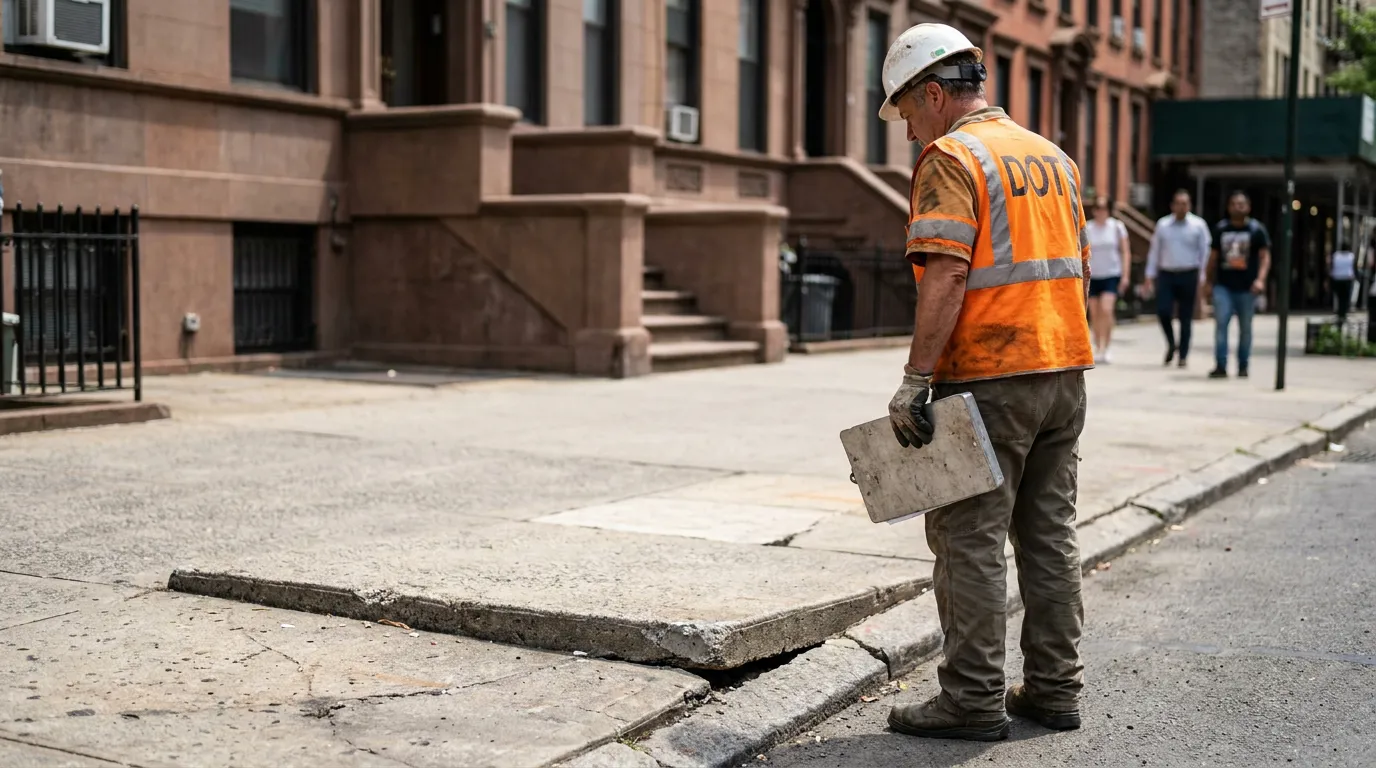
To sue New York City for a street or sidewalk injury, the law generally requires that the City already received written notice of the specific defect. New York’s statutory scheme provides that no civil action may be maintained against a municipality for injuries caused by a defective street, sidewalk, or crosswalk unless written notice of the particular place was actually given beforehand, and the municipality failed to repair within a reasonable time. For villages, this framework appears in New York CPLR 9804 and Village Law § 6-628. For the City of New York, the parallel requirement is codified in Administrative Code § 7-201(c)(2), which specifies that the City must have failed or neglected to repair within fifteen days after receipt of such notice.
This requirement is codified locally through NYC Administrative Code § 7-201, the provision courts apply to City defect claims. A plaintiff who slips on a broken sidewalk must generally show the City had actual, advance written notice of that exact hazard and failed to repair within fifteen days of receiving it. In Gangemi v. City of New York, the parties litigated whether the City had prior written notice under Administrative Code § 7-201. Since 2003 NYC Administrative Code § 7-210 has shifted responsibility for most sidewalk defects to the abutting property owner, so the City itself is generally liable only for roadway defects and sidewalks abutting owner-occupied one-, two-, or three-family residential homes.
These rules give the City a fair chance to inspect and fix a problem before someone is hurt. Notice requirements protect municipalities against stale claims and allow timely investigations. New York courts recognize two limited exceptions: where the City affirmatively created the dangerous condition through negligence, or where a special use conferred a benefit on the City.
What the Big Apple Pothole Map Actually Is
The Big Apple Pothole and Sidewalk Protection Map is a set of maps that plaintiffs’ organizations historically filed with the City to document defective conditions across the five boroughs. Each map uses symbols to mark specific hazards, raised or uneven flags, cracks, holes, and other obstructions, at identified locations. When filed with the appropriate City office, those maps can operate as the written notice the law demands.
This system rests on a statutory duty the City owes to keep organized records of defect notices. General Municipal Law § 50-g requires the City to keep an indexed record of all written notices, indexed according to the location of the alleged defective condition. That location-based indexing makes a map-based system workable as proof of notice.
These defect records are public and must be preserved, which helps injured people build their cases. Under GML § 50-g(2), the record of notices is a public record, and each notice must be preserved for five years after receipt. For a person researching a trip and fall claim NYC, the underlying notice records can often be requested and reviewed during litigation.
Can a Big Apple Pothole Map Prior Written Notice Argument Succeed?
Whether a big apple pothole map prior written notice argument succeeds usually depends on precision: the marking must match the actual defect and its exact location. Courts do not treat a map as a blanket warning about a whole block or intersection. The written notice must relate to the particular place where the injury happened, and the City must have failed to repair within fifteen days after receipt of notice.
Several factors commonly determine whether a map marking will hold up as valid notice:
- Whether the symbol corresponds to the type of defect that caused the fall
- Whether the marked location matches the precise spot of the injury
- Whether the map was filed with the City before the accident
- Whether the City had fifteen days after receipt of notice to inspect or repair
Even a properly marked map does not guarantee recovery, because notice is only one element of a defect claim. You must still prove the condition was actually dangerous, that it caused your injuries, and the extent of damages. A big apple pothole map prior written notice theory gets you past the threshold, but the rest of the case turns on the facts and evidence.
💡 Pro Tip: Photograph the defect from multiple angles the same day you fall, including a wide shot showing nearby landmarks or building addresses. This helps later when comparing your injury site against the coordinates and symbols on a filed map.
Prior Written Notice Versus Notice of Claim
Do not confuse the prior-written-notice rule with the separate notice-of-claim deadline; they are two different requirements. Prior written notice concerns whether the City knew about the defect before your injury. The notice of claim is something you must file after your injury to preserve your right to sue.
New York’s General Municipal Law § 50-e establishes the notice-of-claim requirement that a plaintiff must satisfy before suing a municipality in tort. Compliance with § 50-e is a condition precedent to commencing a tort action against a public corporation, and the notice generally must be served within 90 days after the claim arises. You can review the statutory language on the state’s official page for General Municipal Law Section 50-e. The notice must be in writing, sworn to, and set forth the nature of the claim and the time, place, and manner in which it arose.
Because the notice-of-claim clock runs quickly, timing mistakes can end an otherwise strong case. Courts interpret exceptions narrowly. If you are unsure about deadlines, review guidance on when to file notice against NYC and act promptly.
| Requirement | Governing Law | Timing |
|---|---|---|
| Prior written notice of defect | NYC Admin. Code § 7-201; GML § 50-g; CPLR 9804 | Must exist before the injury |
| Notice of claim | General Municipal Law § 50-e | Filed after the injury |
Practical Steps After a Sidewalk or Street Fall
Acting quickly and preserving evidence gives your slip and fall NYC claim the strongest foundation. Because the City can argue it never received prior notice, the more documentation you gather, the better. Evidence tends to disappear fast once a defect is repaired or paved over.
Take these steps as soon as you are able after a fall on a City sidewalk or roadway:
- Seek medical care and keep all treatment records
- Record the precise location, including cross streets and addresses
- Preserve photos, video, and witness contact information
- Note weather, lighting, and surrounding conditions
Building a premises liability NYC case also means anticipating the City’s defenses, including comparative negligence arguments. New York applies pure comparative fault, so the City may claim you share responsibility for not seeing the hazard, which can reduce but does not bar recovery. Many injured people find that working with a knowledgeable defective sidewalk lawyer NY early makes the notice and evidence questions far more manageable.
Frequently Asked Questions
1. Does a Big Apple map automatically prove the City had notice?
No. The map must accurately mark the specific defect at the exact location where you fell, and it must have been filed before your injury. Courts evaluate these questions closely.
2. What if my defect was not marked on any map?
You may still have options. Other written records on file with the City, consistent with NYC pothole law and § 7-201, may satisfy the requirement. In limited cases you may proceed without prior written notice if the City affirmatively created the defect or made a special use of the area.
3. How long does the City keep defect records?
Under GML § 50-g(2), each notice of defect must be preserved for five years after receipt, and it is a public record. That preservation window makes older records discoverable in litigation.
4. Is the notice of claim the same as prior written notice?
No. Prior written notice concerns what the City knew before your fall, while the notice of claim is a post-injury filing required by General Municipal Law § 50-e. Both may apply to your case.
5. Can I still recover if I was partly at fault?
Possibly. New York follows pure comparative negligence, so a jury may reduce recovery by your share of fault rather than barring it entirely, though outcomes depend on the specific facts.
Bringing the Notice Question Into Focus
A Big Apple map can be powerful evidence that the City had prior written notice of a defect, but only when the marking, location, and timing align with your injury. New York’s prior-written-notice rule under NYC Administrative Code § 7-201, combined with the recording duties of GML § 50-g, the separate notice-of-claim requirement of § 50-e, and the § 7-210 shift of most sidewalk liability to abutting owners, creates a demanding framework. Because these rules are strict and fact-sensitive, careful documentation and timely action matter enormously.
If a defective sidewalk or street left you injured, do not let a missed notice requirement quietly end your claim. Reach out to The Newman Firm to discuss how the prior written notice rules may apply to your situation. Call (718) 896-2700 or send us a message through our case review request today.