

When a Store Loses the Video of Your Fall in New York
Key Takeaways: A New York store may be penalized for losing your fall video, even by accident, because courts can impose spoliation sanctions for ordinary negligence without always requiring proof of bad faith. Under CPLR § 3101(i), stores generally must disclose the full video involving a party, and CPLR §§ 3124 and 3126 let courts compel production and potentially sanction a store that fails to produce it. Under Pegasus Aviation, the injured person generally must show a duty to preserve, a culpable state of mind, and relevance. Relevance may be presumed if the loss was intentional or willful, but generally must be proven if the loss was only negligent. Penalties include adverse inference instructions, preclusion orders, treating issues as resolved, and, in serious cases, striking the store’s pleadings. Acting quickly with a preservation letter can make a big difference. No sanction guarantees a win.
In many cases, a New York store can face penalties for losing or destroying surveillance video of your fall, even if the loss was an accident. New York courts have broad power to sanction a party that fails to preserve or produce evidence, and do not always require proof of bad faith. If a store let fall video be overwritten after it knew or should have known a claim was reasonably likely, the court may give an adverse inference instruction, bar certain evidence or defenses, or, in serious cases, strike the store’s pleadings. Outcomes depend heavily on the facts.
If you think a store deleted or "lost" the video of your fall, The Newman Firm can help you review your options. Call (718) 896-2700 or contact us now to talk through your case.
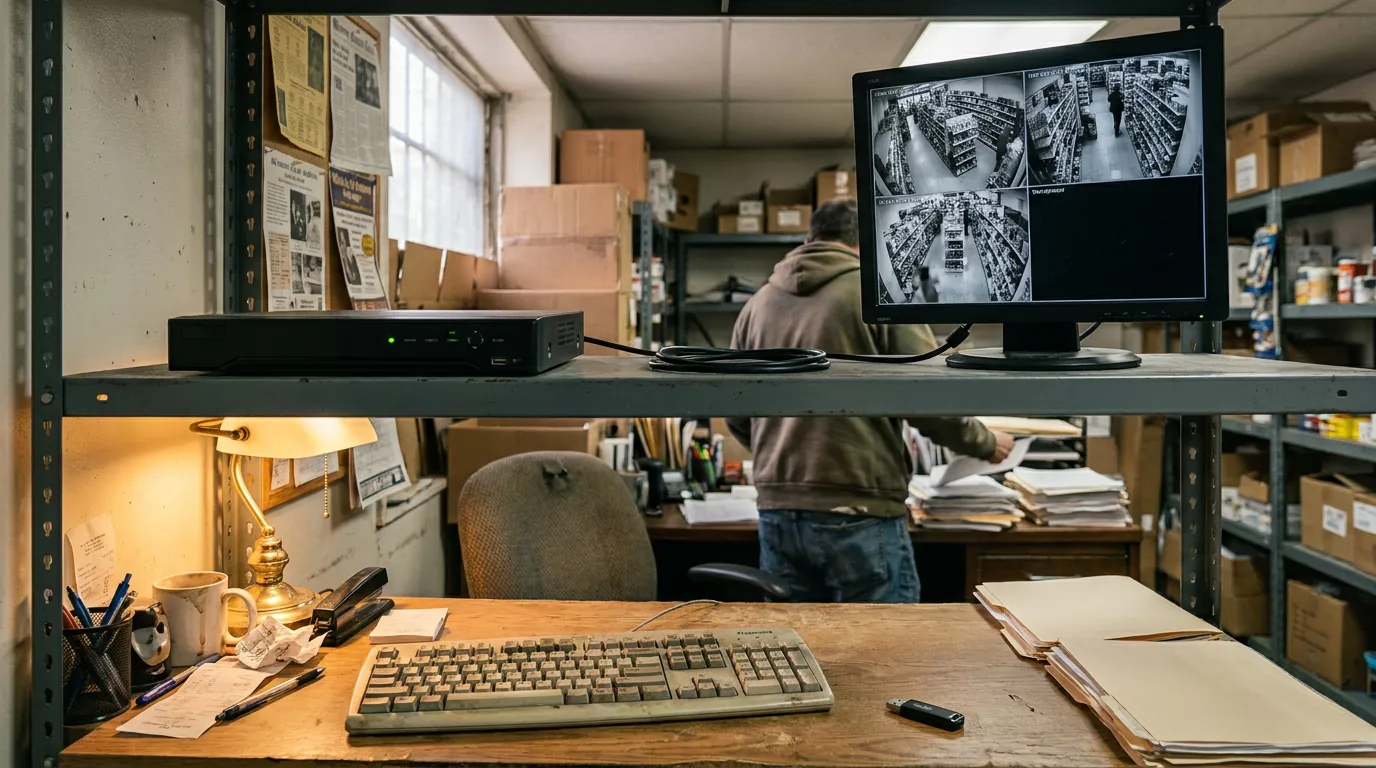
Why Surveillance Footage Matters in a New York Slip and Fall Case
Surveillance video is often the most objective evidence available in a premises liability claim. An injured person generally has to prove duty, breach, causation, and damages. Proving that the store created the hazard or had actual or constructive notice of it is often the hardest part. Video can show how long a spill sat on the floor, whether employees walked past it, and exactly how the fall happened.
Stores often run camera systems that automatically record over old footage after a set period. A fall video can disappear within days or weeks unless someone acts to save it. Many injured people never think to ask for it, and our article on why slip and fall victims miss critical evidence explains how common that gap is.
What Video Can Prove About Notice
Footage can help establish constructive notice, meaning a hazard was visible and existed long enough that employees should have found and fixed it. A timestamped recording may show a puddle forming 40 minutes before your fall, or a cleaning crew skipping an aisle. Without video, you may have to rely on memory and witness accounts, which the store may dispute.
How Video Helps Respond to Comparative Negligence Claims
Stores frequently argue that the injured person was distracted, rushing, or wearing unsafe shoes. New York follows pure comparative negligence under CPLR § 1411. Any fault assigned to you reduces your recovery proportionally but does not bar it. Video may show that you were walking normally and that the hazard was hard to see. When the store loses that footage, it may also remove your best answer to its defense.
The Legal Foundation for Slip and Fall Surveillance Video Spoliation Claims
These claims rest mainly on the Civil Practice Law and Rules (CPLR), along with the courts’ inherent power to address spoliation. "Spoliation" means destroying, losing, or significantly changing evidence. Three CPLR provisions work together to create both the duty to disclose video and the court’s power to penalize a failure to do so.
CPLR § 3101(i): The Duty to Disclose Video in Full
New York law expressly requires disclosure of video recordings involving a party. Under CPLR 3101 disclosure rules, there must be "full disclosure of any films, photographs, video tapes or audio tapes" involving a party, or a party’s officer, agent, or employee. The statute adds that disclosure covers "all portions of such material, including out-takes, rather than only those portions a party intends to use." A store generally cannot hand over a short helpful clip and hold back the rest.
This duty is ongoing. Under CPLR § 3101(h), parties must amend or supplement discovery responses when they learn of new material.
CPLR § 3124: Moving to Compel Production
Your attorney often asks the court to order production before seeking sanctions. Under CPLR § 3124, if a party fails to respond to or comply with a discovery demand, "the party seeking disclosure may move to compel compliance or a response." This motion often forces a store to admit, on the record, that the footage no longer exists, which may support a request for sanctions.
CPLR § 3126: The Court’s Power to Sanction
The central statute for store surveillance video sanctions is CPLR § 3126 penalties. It lets a court "make such orders with regard to the failure or refusal as are just" when a party refuses to obey a disclosure order or willfully fails to disclose information. Although the statute refers to willful failures, New York courts regularly use it as a basis for spoliation sanctions, including for negligent loss of evidence.
Can You Get Spoliation Sanctions Without Bad Faith?
Yes, New York courts may impose spoliation sanctions without bad faith, under certain circumstances. The New York Court of Appeals addressed this in Pegasus Aviation I, Inc. v. Varig Logistics S.A., 26 N.Y.3d 543 (2015). A party seeking sanctions generally must show:
- The party with control of the evidence had a duty to preserve it when it was destroyed.
- The evidence was destroyed with a "culpable state of mind," which can include ordinary negligence.
- The destroyed evidence was relevant to the requesting party’s claim or defense.
Because "culpable state of mind" includes negligence, negligent spoliation is a real risk for stores. A store does not have to erase tapes on purpose to face consequences. If the store received notice of a fall or a likely claim and let its system overwrite the recording anyway, a court may find that loss negligent.
The store’s state of mind still matters. Under Pegasus Aviation, when evidence is destroyed intentionally or willfully, courts may presume it was relevant. When the loss was only negligent, the injured party generally must prove relevance. A duty to preserve generally arises only once litigation is pending or reasonably anticipated, so courts look closely at when that duty began. A store that routinely overwrote footage before it had reason to expect a claim may avoid sanctions.
💡 Pro Tip: A written preservation letter sent soon after your fall can help show that the store knew of your claim, making it harder for the store to argue that deleting the footage was routine and innocent.
What Penalties Can a Store Face for Losing Fall Video?
CPLR § 3126 lists specific sanctions, and courts may also give other remedies they consider just, such as adverse inference instructions. Judges choose based on the prejudice caused.
| Sanction | What It Means for Your Case |
|---|---|
| Issue deemed resolved (§ 3126(1)) | The court may treat certain facts, such as notice of the hazard, as established in your favor. |
| Preclusion order (§ 3126(2)) | The store may be barred from supporting certain defenses, offering certain evidence, or using certain witnesses. |
| Striking pleadings or default (§ 3126(3)) | The court may strike the store’s answer or enter a default judgment on liability. |
| Adverse inference instruction | The jury may be told it can infer the missing video would have been unfavorable to the store. |
The adverse inference instruction is one of the most common remedies. Courts generally view striking an answer as drastic, typically reserving it for willful or contumacious conduct, or for cases where the loss leaves the injured person without any means to prove the case.
What to Do If Your Slip and Fall Video Was Lost
Acting fast is one of the most effective ways to protect footage before it disappears. If the video has already vanished, your attorney may still be able to use that loss to your advantage, depending on when and why it happened.
Useful steps generally include the following. Report the fall to a manager and ask for a written incident report. Write down the date, time, and location of your fall, along with the positions of any visible cameras. Get medical treatment right away and keep all records. Then speak with a lawyer who can send a formal preservation demand.
💡 Pro Tip: During discovery, your attorney may request the store’s video retention policy and any internal emails about the footage. These may show whether anyone reviewed the video before it was erased.
A NY slip and fall lawyer can pursue discovery demands, depose store employees about the camera system, and file motions under CPLR §§ 3124 and 3126 when footage goes missing. Learn more through our slip and fall surveillance video spoliation lawyer page.
Frequently Asked Questions
1. Does the store have to intend to destroy the video to be penalized?
No, intent is not required in every case. Under Pegasus Aviation, negligence can satisfy the culpable state of mind requirement. However, when the loss was only negligent, you generally must show the footage was relevant.
2. How long do stores keep surveillance footage?
Retention periods vary widely. Some systems record over footage within days, while others keep it for weeks. Because no single rule applies, sending a preservation request quickly is important.
3. What if the store says its system automatically overwrote the video?
Automatic deletion does not necessarily excuse the store. If the store knew about your fall or a likely claim before the footage was overwritten, a court may find it failed its duty to preserve. If the store had no reason to expect a claim, routine overwriting may not lead to sanctions.
4. Can the store give me only part of the video?
Generally, no. CPLR § 3101(i) requires disclosure of all portions of video involving a party, including outtakes.
5. Will a spoliation sanction guarantee I win my case?
No sanction guarantees a result. An adverse inference may strengthen your position, but unless the court strikes the store’s answer or resolves liability in your favor, you still generally must prove every element of your claim and your damages.
Protecting Your Claim When Key Evidence Disappears
New York law may give injured people meaningful tools when a store loses or destroys fall video. Under CPLR §§ 3101, 3124, and 3126, stores generally must disclose footage in full, and courts may enforce that duty and sanction negligent losses once a duty to preserve has arisen. Early action often makes the difference.
If you believe a store lost the video of your fall, The Newman Firm is ready to help you understand your rights. Call us at (718) 896-2700 or schedule your free consultation today.
Disclaimer: This content is for informational purposes only and is not legal advice. Every case is unique, and results may vary. Consult an attorney about your specific circumstances.