
Stranded on a NYC Highway Shoulder? What the Law Now Says About Your Safety
Key Takeaways: Yes, New York amended VTL § 1144-a so the Move Over Law now covers disabled vehicles and vehicles involved in accidents on a highway shoulder, not only emergency and hazard vehicles. The change took effect March 27, 2024. Drivers approaching a qualifying stopped vehicle must use due care. On parkways and controlled-access highways, that generally means moving over when it is safe and legal. On other roads, or when moving over is not safe, it generally means slowing down. Breaking the law can support negligence in an injury claim, but you still have to prove causation and damages, and any fault you share can reduce your recovery. No-fault insurance usually pays medical bills and lost wages first, and suing for pain and suffering generally requires meeting New York’s serious injury threshold. Deadlines matter: 30 days for no-fault applications, 90 days for notices of claim against the city and other public entities, and three years for most personal injury lawsuits against private parties. Collecting evidence quickly, such as police reports, photos, proof that your hazard lights were on, and video footage, can strengthen a roadside injury case.
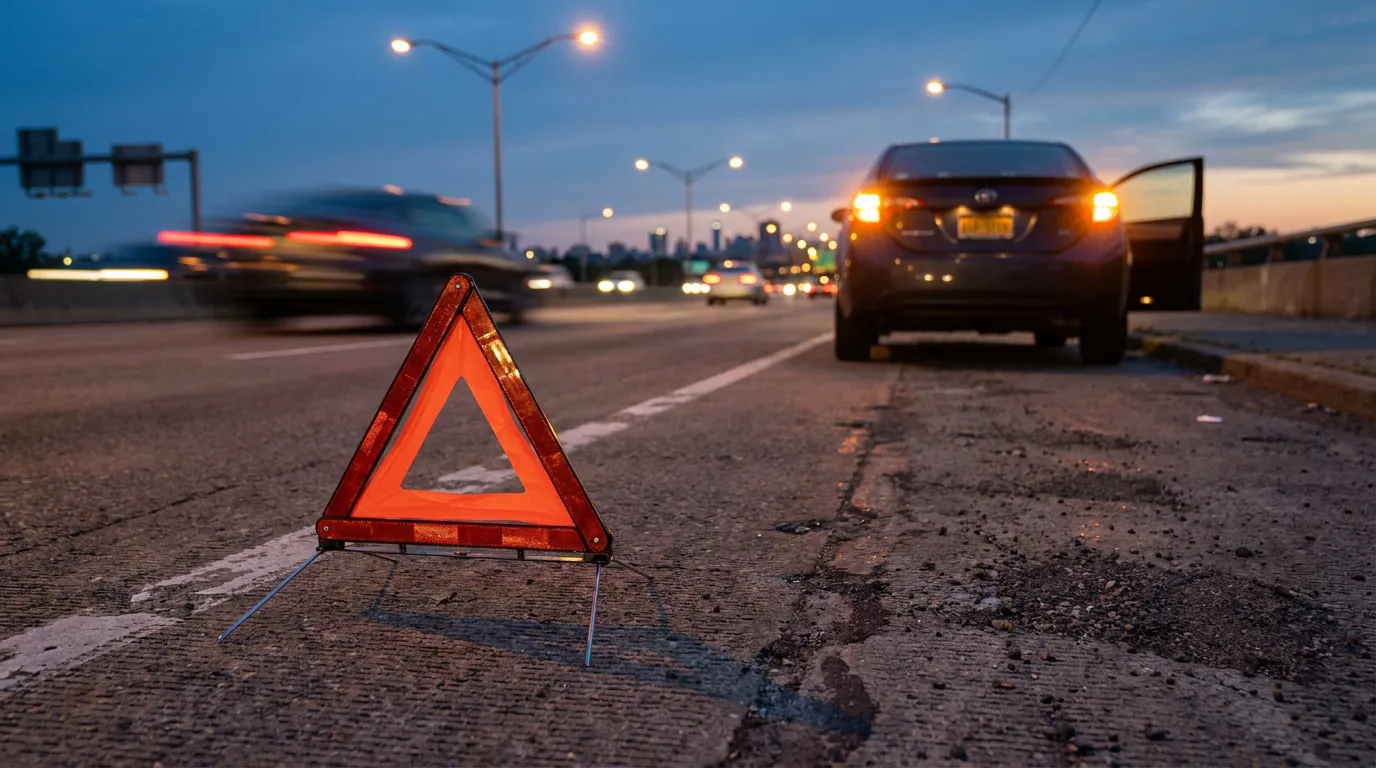
Yes, New York’s Move Over Law now covers disabled vehicles stopped on a highway shoulder, not just police cars and tow trucks. New York lawmakers amended Vehicle and Traffic Law (VTL) § 1144-a to extend its protections to broken-down vehicles and vehicles involved in accidents. Governor Hochul signed the amendment in 2023, and it took effect March 27, 2024. Before the change, the statute generally covered only emergency and hazard vehicles and vehicles showing blue or green lights. If a passing driver hit you or your vehicle after a NYC highway breakdown, the updated law may help show that the driver owed you a specific duty of care. Whether you have a claim still depends on the facts of your case.
If you or a loved one got hurt while stopped on the shoulder of the BQE, the Van Wyck, the Long Island Expressway, or any other New York City roadway, The Newman Firm can help you understand your options. Call us at 718-896-2700 or contact us now to talk about your situation.
How the Move Over Law NY Expanded to Cover Breakdowns
The legislature expanded VTL § 1144-a in stages. The law started out protecting police and emergency vehicles. It later grew to cover hazard vehicles, such as tow trucks and highway maintenance vehicles, and then vehicles showing blue or green lights. Volunteer firefighters use blue lights, and volunteer ambulance workers use green lights.
The most recent expansion goes beyond marked vehicles. It came from Senate Bill S5129A (2023), signed September 29, 2023 and effective March 27, 2024. It requires operators on a parkway or controlled-access highway to use due care to avoid colliding with any motor vehicle that is parked, stopped, or standing on the shoulder or any portion of the roadway. This includes disabled vehicles and vehicles involved in accidents, but it is not limited to them. A separate 2025 proposal, Senate Bill S311, would increase penalties for move-over violations that injure or kill first responders, tow operators, and similar safety workers. As of this writing, it is still pending and has not become law.
The Statute’s Heading Now Names Disabled Vehicles
Lawmakers rewrote the section heading to mention disabled vehicles. A heading does not control how courts read a statute’s operative text, but here the operative text was also amended to add disabled vehicles and vehicles involved in accidents.
Why This Matters for Everyday Drivers
Most people stuck on a highway shoulder are not first responders. They may be commuters with a flat tire, drivers who ran out of gas, or families waiting for help after a minor collision. These people are among the most exposed on the road, and the expansion recognizes that. Approaching drivers generally owe similar caution to any qualifying vehicle stopped on the roadside.
What VTL § 1144-a Requires of Approaching Drivers
The central duty under VTL § 1144-a(a) is a due care standard. The statute provides that "every operator of a motor vehicle shall exercise due care to avoid colliding with" a qualifying vehicle stopped on the shoulder or any portion of the highway.
In practice, the law asks drivers approaching a qualifying stopped vehicle showing warning lights to:
- Move into a lane that is not next to the stopped vehicle, if it is safe and legal to do so
- Slow down significantly if moving over is not safely possible, such as in heavy traffic or on a two-lane road
- Stay alert and give the stopped vehicle and the people around it room
These requirements depend on conditions. The specific duty to change lanes applies on parkways and controlled-access highways, and only when the move is safe and otherwise legal. On other roads, or when a lane change is not safe, due care generally means reducing speed. Whether a driver actually used "due care" is usually a question of fact.
| Vehicle Type | Generally Covered by VTL § 1144-a? |
|---|---|
| Police and emergency vehicles | Yes |
| Hazard vehicles (tow trucks, maintenance) | Yes |
| Vehicles displaying blue or green lights | Yes |
| Disabled vehicles on the shoulder | Yes, under the amendment |
| Vehicles involved in an accident on the shoulder | Yes, under the amendment |
💡 Pro Tip: If your vehicle breaks down, turn on your hazard lights right away if you can do so safely. Warning lights may affect whether the statute’s specific protections apply and how clearly other drivers can see you.
Turning a Move Over Violation Into an Injury Claim
Breaking the Move Over Law can support a negligence claim, but it does not decide one automatically. In New York, an unexcused violation of a VTL safety statute is generally treated as negligence per se. Courts may excuse a violation in certain circumstances, such as an emergency the driver did not create. Even when a violation is proven, you still have to show that it caused your injuries and that you suffered real damages. Under CPLR § 1411(a), any fault you share generally reduces your recovery in proportion but does not bar it. Under new CPLR § 1411(b), enacted in 2026, in motor vehicle personal injury actions subject to Insurance Law Article 51, recovery is barred if your fault is greater than the defendant’s fault, or greater than the combined fault of all defendants.
No-Fault Benefits and the Serious Injury Threshold
Your own no-fault coverage generally pays first. Under Insurance Law § 5102 and § 5103, no-fault benefits usually cover basic economic loss, such as medical bills and up to 80% of lost wages, subject to monthly caps and policy limits, no matter who caused the crash. To sue the at-fault driver for pain and suffering, you generally have to meet the "serious injury" threshold in Insurance Law § 5102(d). Examples include a fracture, significant disfigurement, or a medically determined injury that keeps you from substantially all of your usual daily activities for at least 90 of the 180 days after the accident. No-fault applications generally must be submitted within 30 days, so acting quickly matters.
Deadlines Differ by Defendant
Most personal injury lawsuits in New York must be filed within three years under CPLR § 214. Wrongful death claims generally have a two-year deadline under EPTL § 5-4.1. If a city vehicle or employee was involved, General Municipal Law § 50-e generally requires a notice of claim within 90 days, and under § 50-i the lawsuit usually must be filed within one year and 90 days. Some exceptions can extend a deadline, but courts apply them narrowly.
💡 Pro Tip: After a roadside injury, ask for any 911 call records and nearby traffic camera footage early. NYC agencies and private businesses may erase recordings within weeks.
Evidence That Can Strengthen a Roadside Injury Case
Strong evidence often decides whether a Move Over Law NY violation leads to compensation. Insurers may argue that your vehicle was not visible, that the approaching driver could not safely change lanes, or that your injuries came from something else. Careful records can help answer those arguments.
Useful evidence may include the police accident report, photos showing where your vehicle sat on the shoulder, proof that your hazard lights were on, witness contact information, and dashcam video. Medical records matter just as much. See a doctor promptly and follow your treatment plan, because gaps in care may be used to question how serious your injuries are. A Move Over Law NY lawyer may be able to help preserve this evidence before it disappears.
Frequently Asked Questions
1. Does the Move Over Law apply if my car broke down on the Grand Central Parkway?
Generally, yes. Under the amended VTL § 1144-a, disabled vehicles stopped on a highway shoulder fall within the statute’s protections, and the Grand Central Parkway is a parkway where the lane-change duty applies. Whether it applies to your situation may still depend on where your vehicle was stopped and whether warning lights were displayed.
2. Do I need my hazard lights on to be protected?
The statute’s lane-change and slow-down requirements are generally tied to stopped vehicles displaying warning lights. Even without the statute, drivers still owe a common-law duty of reasonable care to avoid hitting a visible stopped vehicle or person.
3. Can I sue if a driver hit me while I stood outside my disabled car?
You may have a claim if the driver’s negligence caused your injuries. To recover non-economic damages such as pain and suffering, you generally must also meet New York’s serious injury threshold. Pedestrians hurt by a car may also qualify for no-fault benefits.
4. Does a traffic ticket for the at-fault driver prove my case?
A ticket or conviction may help, but it does not guarantee that a civil claim will succeed. A guilty plea may be used as evidence against the driver, while a ticket alone or a conviction after trial usually carries less weight. You generally still have to show causation and damages.
5. Where can I learn more about New York car accident claims?
You can read more on our NYC accident injury blog, which covers no-fault claims and serious injury rules.
Protecting Your Rights After a Shoulder Collision
The expanded Move Over Law NY is intended to give stranded drivers roadside protection similar to what first responders receive. VTL § 1144-a now names disabled vehicles and vehicles involved in accidents and requires approaching drivers to use due care, which generally means moving over when it is safe and legal, or slowing down when it is not. A violation may support an injury claim, but the outcome depends on evidence, the serious injury threshold, and filing deadlines.
If a careless driver injured you or a family member during a highway breakdown, The Newman Firm is ready to review your case. Call 718-896-2700 or schedule your free consultation today.
Disclaimer: This content is for informational purposes only and is not legal advice. Every case is unique, and results may vary. Consult an attorney about your specific circumstances.