

When a Red Light Turn Puts a Pedestrian in Danger
Key Takeaways: No, it is generally not legal to turn right on red in NYC. It is prohibited unless a posted sign permits it, and even then the driver must stop completely and yield to any pedestrian lawfully crossing. Under VTL §1111(d)(2), cities with one million or more residents are excluded from the statewide right-on-red allowance, and New York law requires turning drivers to yield to pedestrians in the crosswalk whether turning on red or green. A driver’s traffic violation does not automatically win a civil case, but it can be strong evidence of negligence. Under CPLR §1411, New York generally follows pure comparative negligence, but since May 2026 motor vehicle injury cases are subject to a modified rule that can bar recovery if the plaintiff is more than 50% at fault or more at fault than the defendant. No-Fault insurance generally covers basic economic losses up to policy limits, while suing for pain and suffering generally requires meeting the serious injury threshold. Most claims against private drivers must be filed within three years, but claims against a city or other public entity generally require a Notice of Claim within 90 days.
In New York City, turning right on a red light is generally illegal unless a posted sign specifically permits it, and even where a sign allows the turn, the driver must yield to any pedestrian lawfully crossing. A driver who turns right on red into a person in the crosswalk may be breaking two rules at once. Traffic law violations can serve as important evidence of negligence in a personal injury claim.
If a turning driver hit you, getting guidance early can help protect evidence and keep your claim on schedule. The Newman Firm helps injured pedestrians throughout New York City understand their rights after a crash. Call 718-896-2700 or contact us now to talk about what happened.
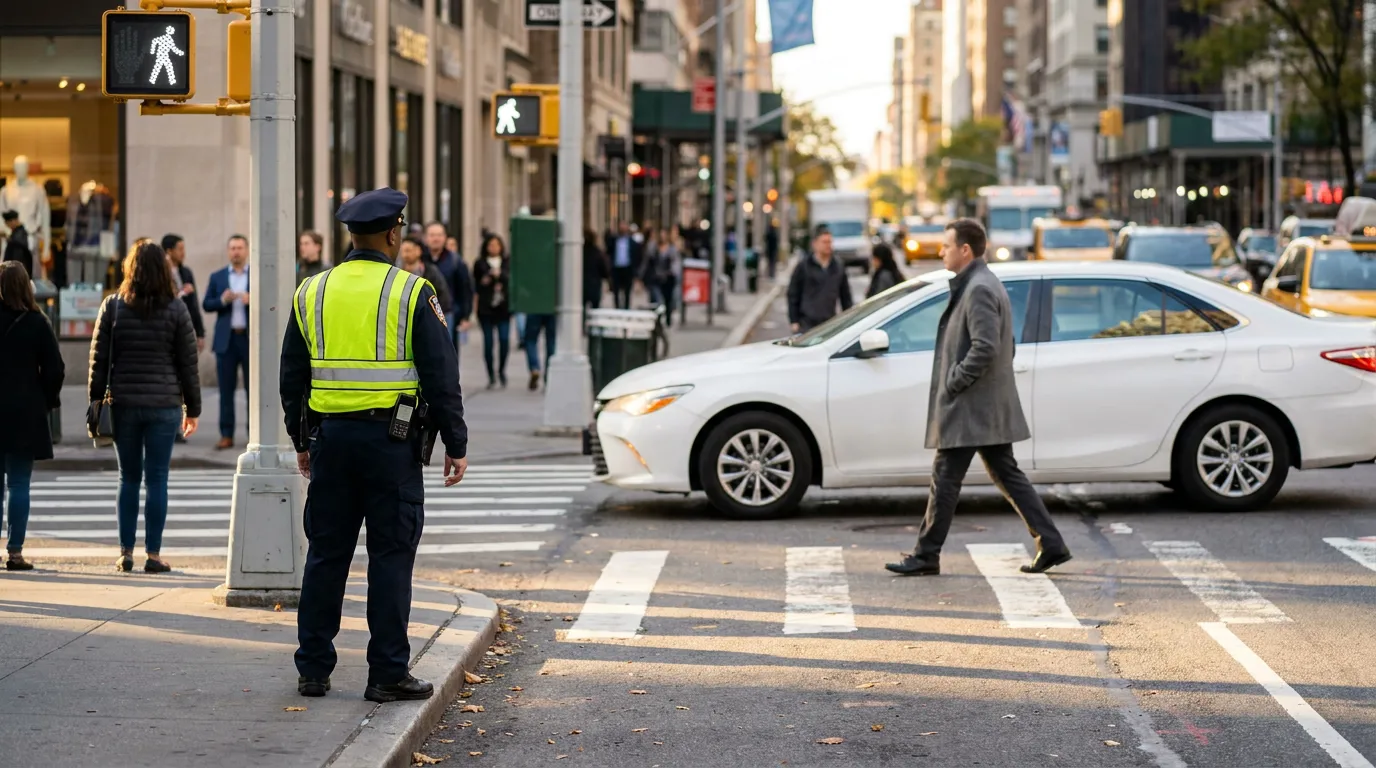
Is Right on Red Legal in NYC? The Short Answer
The answer depends on where you are in New York State, and NYC flips the statewide default. Many drivers who learned elsewhere assume right on red is allowed everywhere. In the five boroughs, that assumption is generally wrong.
The Statewide Default Rule
Outside New York City, a driver may generally turn right on red after coming to a complete stop and yielding. Under New York Vehicle and Traffic Law §1111(d)(1), traffic facing a steady red signal must stop at a marked stop line. If there is no stop line, the driver must stop before the crosswalk on the near side of the intersection, or if there is no crosswalk, before entering the intersection. VTL §1111(d)(2)(a) then allows a right turn after that stop, unless a sign prohibits it. The driver must still yield to pedestrians lawfully in the adjacent crosswalk and to other traffic. You can read the full text of New York’s traffic signal statute for the exact wording.
NYC’s Reversed Default
VTL §1111(d)(2) carves out an exception for any city with a population of one million or more, which means New York City. In NYC, the NYC Traffic Rules (Title 34 of the Rules of the City of New York) prohibit turning on a steady red signal unless a sign permits it. In practice, drivers should treat every red light in the five boroughs as a full stop and wait for green unless a sign permits the turn.
| Location | Right on Red Default | Duty to Pedestrians |
|---|---|---|
| New York State (outside NYC) | Allowed after a full stop unless a sign prohibits it | Must yield to pedestrians lawfully in the crosswalk |
| New York City | Prohibited unless a sign permits it | Must yield even where a sign permits the turn |
When NYCDOT Posts a Permitting Sign
At a small number of NYC intersections, the NYC Department of Transportation has installed signs permitting right turns on red, typically worded "Right Turn on Red Permitted After Stop." At these locations, a driver may turn only after stopping completely and yielding to pedestrians and other traffic. A sign permits a turn. It does not give the driver priority over a person on foot.
Pedestrian Crossing Rights Under New York Law
New York law generally gives pedestrians lawfully in a crosswalk the right-of-way, and drivers are required to yield. Several statutes work together to protect people on foot at intersections.
Yielding on a Green Light
Even when a driver has a green light, VTL §1111(a)(1) requires turning traffic to yield to pedestrians and other traffic lawfully within the intersection or an adjacent crosswalk. This is the main statutory basis for pedestrian right-of-way at signalized intersections. A driver turning right on green who hits a pedestrian crossing with the signal may face similar liability questions as one who turned on red.
Crosswalks Without Working Signals
VTL §1151(a) covers intersections where traffic-control signals are not in place or not operating. Under that section, a driver "shall yield the right of way, slowing down or stopping if need be," to a pedestrian in a marked or unmarked crosswalk. You can review the text of New York’s crosswalk yielding law directly. Pedestrians also have duties: §1151(b) bars suddenly stepping into the path of a vehicle so close that the driver cannot yield.
NYC adds its own protection through Administrative Code §19-190, often called the Right of Way Law. Under that law, a driver who fails to yield to a pedestrian who has the right of way and causes physical injury may face a traffic infraction with civil penalties or, in some cases, a misdemeanor charge. The law contains an exception where the failure to yield was not caused by the driver’s failure to exercise due care, so outcomes depend on the facts. For a borough-level look, see our guide on pedestrian right-of-way laws in Queens.
Building a Right on Red Pedestrian Accident NYC Claim
A traffic violation does not automatically win a civil case, but it can be strong evidence that the driver was negligent. In New York, an unexcused violation of the Vehicle and Traffic Law may constitute negligence in itself, though the injured person must still show causation and damages. In a right on red pedestrian accident NYC case, the injured person generally must show that the driver breached a duty of care, that the breach caused the injury, and that the injury led to compensable damages.
Evidence tends to disappear quickly after a crash, so early action often matters. Useful evidence may include:
- The police accident report and your own MV-104 report to the DMV, if required
- Photos of the intersection, signage, traffic signals, and your injuries
- Names and contact details of witnesses
- Surveillance, traffic camera, or dashcam footage, which is often overwritten within days or weeks
- Medical records showing your diagnosis and treatment
💡 Pro Tip: Take a photo of whether a "Right Turn on Red Permitted" sign was posted at the intersection. Whether that sign exists may affect how a court views the driver’s conduct.
No-Fault and the Serious Injury Threshold
New York’s No-Fault system generally covers a pedestrian’s basic economic losses, such as medical bills and a portion of lost wages, through the vehicle’s insurance regardless of fault, typically up to $50,000 in basic benefits. If you or a household relative own an insured vehicle, your own policy may apply instead. To sue the driver for pain and suffering, you generally must meet the "serious injury" threshold under Insurance Law §5102(d), which includes categories such as death, dismemberment, significant disfigurement, a fracture, loss of a fetus, permanent loss of use, permanent consequential limitation, and significant limitation of use. The former 90/180-day category was eliminated by Part EE of Chapter 58 of the Laws of 2026 for actions commenced on or after May 26, 2026. No-Fault applications generally must be filed within 30 days of the accident.
Comparative Negligence
Under CPLR §1411(a), New York generally follows pure comparative negligence. If an insurer argues you were partly at fault, for example by crossing against the signal, your recovery may be reduced by your percentage of fault. However, since May 2026, CPLR §1411(b) applies modified comparative fault to motor vehicle personal injury actions subject to Insurance Law Article 51 commenced on or after the amendment took effect. In those cases, a plaintiff who is more than 50% at fault, or more at fault than the defendant, is barred from recovery. A knowledgeable right on red pedestrian accident NYC lawyer can help evaluate how these arguments might affect your case.
Filing Deadlines You Cannot Afford to Miss
Most pedestrian injury lawsuits against private drivers in New York must be filed within three years under CPLR §214(5). Claims against a city or other public entity follow much stricter rules. Under General Municipal Law §50-e, a Notice of Claim is generally due within 90 days, and GML §50-i generally requires filing suit within one year and 90 days. Some public authorities, such as the MTA and NYC Transit, have their own similar rules.
These government notice deadlines are separate from the civil statute of limitations. Courts may allow late notice only in limited circumstances, and they interpret those exceptions narrowly. No extension should be assumed.
💡 Pro Tip: If the vehicle that hit you had city markings, treat the 90-day Notice of Claim window as your most urgent deadline.
Frequently Asked Questions
1. Is right on red legal in NYC?
Generally, no. VTL §1111(d)(2) excludes cities with one million or more residents from the statewide right-on-red allowance, and NYC Traffic Rules prohibit the turn unless a sign specifically permits it.
2. If a sign allows right on red, can the driver go before I finish crossing?
Generally, no. The driver must stop completely and yield before turning. Under VTL §1111(d)(2)(a), drivers must yield to pedestrians lawfully in the adjacent crosswalk.
3. Does a driver’s traffic ticket prove my injury case?
Not on its own. A ticket may support a negligence claim, but the civil case is separate from the traffic proceeding.
4. What if I was crossing against the light?
You may still be able to recover in some cases. Under CPLR §1411(a), compensation generally may be reduced by your share of fault. But in motor vehicle cases subject to CPLR §1411(b), a plaintiff who is more than 50% at fault, or more at fault than the defendant, is barred from recovery.
5. How long do I have to file a claim?
Generally three years against a private driver under CPLR §214(5). Claims against a city or other public entity typically require a Notice of Claim within 90 days under GML §50-e, and a lawsuit generally within one year and 90 days.
Protecting Your Rights After an Illegal Turn
New York City reverses the statewide right-on-red rule, and every driver, whether turning on red or green, must yield to pedestrians lawfully crossing. When a driver ignores these rules, the violation may become key evidence in a claim for medical costs, lost wages, and pain and suffering.
You do not have to sort through these rules alone while you recover. The Newman Firm works with injured pedestrians and their families across New York City. Call (718) 896-2700 or schedule a consultation today to discuss your situation.
Disclaimer: This content is for informational purposes only and is not legal advice. Every case is unique, and results may vary. Consult an attorney about your specific circumstances.