

Why NYC Sidewalks Have Become More Dangerous for Older New Yorkers
Key Takeaways: Seniors account for a disproportionate share of NYC pedestrian fatalities due to age-related changes, slower walking speeds, difficulty judging vehicle speeds, and vision limitations that make collisions harder to survive, particularly at dark, poorly lit, mid-block crossings. New York offers several recovery paths: no-fault first party benefits cover medical bills and lost income regardless of fault, with pain and suffering available only if a "serious injury" threshold is met. When a driver flees or is uninsured, MVAIC may provide compensation. Strict deadlines apply, from a three-year statute of limitations against private drivers to a 90-day Notice of Claim against government entities. Acting promptly to preserve evidence and consult a lawyer is critical.
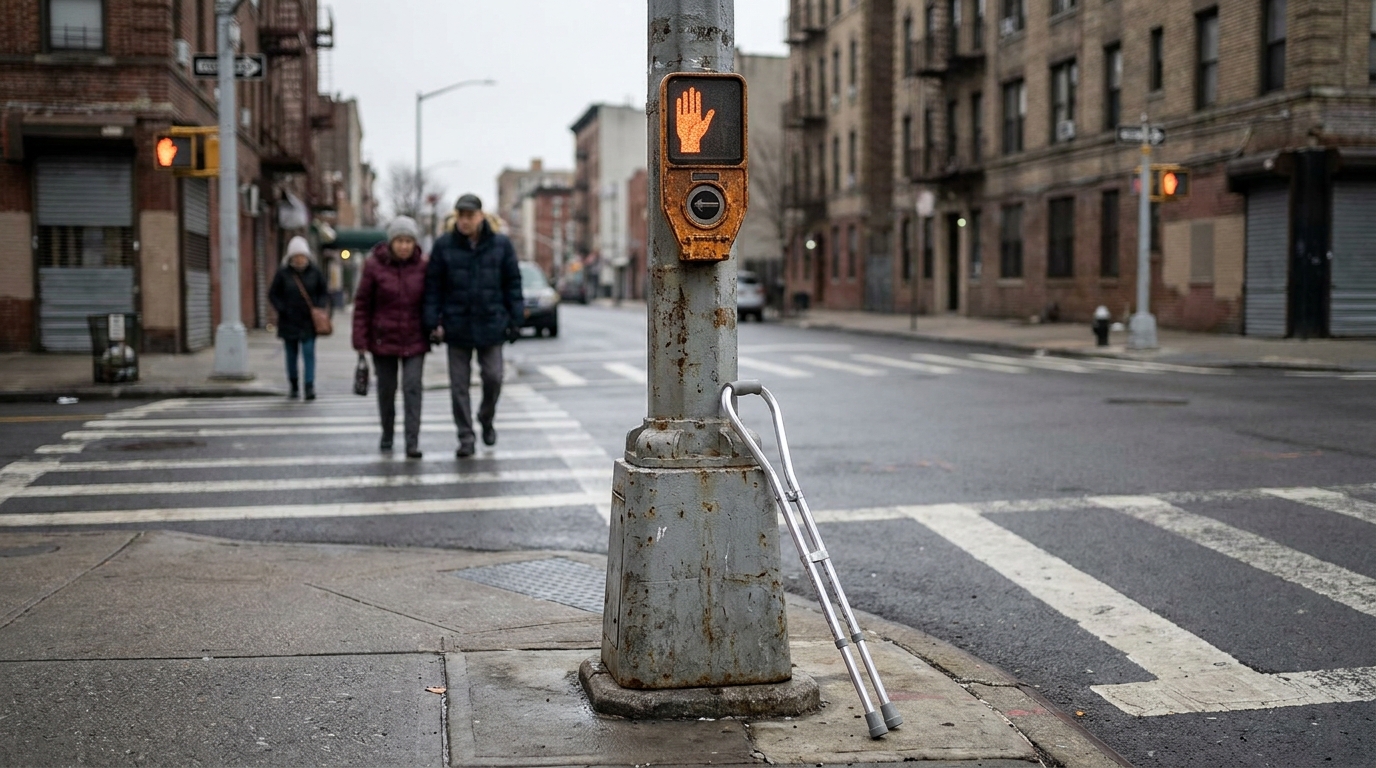
Seniors now account for a disproportionate share of pedestrian deaths across New York City. Adults 65 and older walk less than younger people, yet they suffer fatal injuries at strikingly high rates because age-related changes make collisions harder to survive. In dense neighborhoods across Queens, Brooklyn, Manhattan, and the Bronx, older walkers face fast-moving traffic, poor lighting, and long crossings not designed with their mobility in mind.
If you or an aging parent was struck while walking, the team at The Newman Firm helps injured pedestrians and grieving families pursue fair recovery. Reach a New York pedestrian accident lawyer by calling (718) 896-2700 for guidance.
The Numbers Behind Senior Pedestrian Risk in New York
National trend lines show why senior pedestrian safety has become an urgent concern. Pedestrian deaths rose roughly 80% between 2009 and 2023, while all other traffic fatalities increased only about 13%. That gap underscores how walkers, especially older walkers, have absorbed a growing share of the danger on American streets.
Older adults carry a heavier burden within those totals. Nationally, about 19% of pedestrian fatalities in 2021 involved adults 65 and older, even though that group makes up roughly 17% of the population and walks less than younger people. The 60-to-64 and 65-to-70 groups had the largest percentage of pedestrian fatalities at 23%, with the 60-to-64 group showing the highest fatality rate at over 3 deaths per 100,000 people.
Environmental conditions compound the danger. More than three-quarters of pedestrian fatalities occur after dark, with fatal nighttime pedestrian crashes rising about 84% between 2010 and 2023. About 73% of fatalities happen at non-intersection locations. For an older adult with age-related vision changes or slower walking speed, a poorly lit mid-block crossing can be especially hazardous. Review national fatality patterns through the Insurance Institute for Highway Safety pedestrian data for additional context.
💡 Pro Tip: If a loved one was struck at night, photograph the scene at the same hour on a later date to document lighting conditions, sightlines, and obstructed signage that may support a negligence claim.
Age-Related Factors That Increase Vulnerability
Several physical changes make older pedestrians more likely to be struck and more likely to suffer fatal injuries. Safety researchers point to slower walking speeds, difficulty stepping up or down from curbs, trouble judging the speed of oncoming vehicles, and confusion about pedestrian signal phases. These are predictable, well-documented aspects of aging that traffic engineering often fails to accommodate.
These factors also matter legally. New York follows a pure comparative negligence rule, and defense insurers sometimes try to shift blame onto an injured senior. Documenting roadway design, signal timing, and lighting can help counter arguments that an older pedestrian was at fault.
New York’s No-Fault Protections for Injured Senior Pedestrians
New York law gives pedestrians an important benefit after a crash. Under the state’s no-fault insurance system, a pedestrian struck by a motor vehicle is generally entitled to "first party benefits" for basic economic loss regardless of who caused the collision. A senior hit by a car in NYC can typically access coverage for medical expenses and lost income through the insurer of the vehicle that struck them. The framework appears in New York’s no-fault first party benefits statute, Insurance Law § 5103(a)(1), which also provides a death benefit under § 5103(a)(4).
No-fault benefits don’t cover pain and suffering. To pursue non-economic damages, an injured pedestrian generally must meet New York’s "serious injury" threshold under Insurance Law § 5102(d), which can include fractures, significant disfigurement, or permanent limitation of a body function. Whether an injury qualifies is fact-dependent and turns on medical evidence.
💡 Pro Tip: File your no-fault application promptly. Carriers typically expect the written application within 30 days of the crash, and missing that window can complicate or jeopardize benefits.
New York also recognizes seniors as a defined class within its insurance framework. Insurance Law § 3111(f) defines a "senior citizen insured" as a New York resident who is the policyowner or insured and is age 65 or older. This provision addresses specific notice protections, reflecting the state’s recognition that elderly policyholders may warrant additional procedural safeguards.
When Drivers Flee or Lack Insurance
One of the most painful scenarios is a hit-and-run crash. Roughly one in four pedestrian deaths, about 25%, results from a hit-and-run. When a driver flees or has no insurance, victims understandably fear they have no path to recovery.
New York created a safety net for exactly these situations. The Motor Vehicle Accident Indemnification Corporation, established under Insurance Law § 5201, exists to compensate qualified innocent victims struck by uninsured, unidentified, or stolen vehicles. For a senior pedestrian hit by a driver who flees the scene, this may provide a meaningful avenue for compensation, but eligibility is strictly limited. Victims must generally have no other available insurance and must file a notice of intention to make a claim within 90 days if the accident involved a hit-and-run or unidentified motor vehicle, or within 180 days if the accident involved an identified but uninsured motor vehicle.
Municipal liability can also arise in limited circumstances. New York Highway Law § 118 authorizes counties to construct sidewalks along county roads where public safety demands it. Within New York City, sidewalk maintenance liability more often turns on Administrative Code § 7-210, which generally shifts responsibility for maintaining sidewalks in a reasonably safe condition onto abutting property owners. Where a government entity failed to provide reasonably safe pedestrian infrastructure, a claim may be possible, though such claims face demanding procedural requirements.
How a New York Pedestrian Accident Lawyer Can Help Senior Victims
Pursuing full compensation after a serious pedestrian crash involves coordinating several overlapping systems. No-fault benefits, a potential liability claim against the driver, possible MVAIC involvement, and any municipal claim each carry their own rules and timelines. An attorney with extensive experience can help gather the police report, secure medical documentation, and preserve surveillance footage before it is overwritten.
Evidence preservation is often where cases are won or lost. Surveillance video from nearby businesses, witness contact information, and the official MV-104AN police report can all support proof of negligence and causation. Because older pedestrians may be hospitalized and unable to act quickly, family members frequently step in to protect these records. Learn more about the full scope of representation on the firm’s NYC pedestrian accident lawyer page.
Key documents and evidence to preserve early include:
- The MV-104AN police accident report and responding officer information
- Photographs of the scene, lighting, crosswalks, and vehicle damage
- Names and contact details of any witnesses
- Medical records connecting the injuries to the crash
- Surveillance or doorbell-camera footage from nearby properties
💡 Pro Tip: Ask businesses near the crash site in writing to preserve their security footage immediately. Many systems automatically erase recordings within days.
Deadlines and Evidence That Can Make or Break a Claim
Strict timelines govern nearly every pedestrian injury claim in New York. Civil lawsuits against private drivers are generally subject to a three-year statute of limitations for personal injury, but claims involving a government entity typically require a Notice of Claim within 90 days and a much shorter lawsuit window, generally one year and 90 days. These administrative deadlines are separate from the civil statute of limitations, and courts tend to interpret exceptions narrowly.
Tolling and discovery rules are limited and fact-specific. In certain circumstances, deadlines may be extended, but no extension is automatic or guaranteed. Families should consult a lawyer promptly rather than assume an exception applies.
| Claim Type | General Deadline | Nature of Deadline |
|---|---|---|
| Personal injury vs. private driver | Generally 3 years | Civil statute of limitations |
| Claim involving a government entity | Notice of Claim often within 90 days | Administrative prerequisite |
| MVAIC (uninsured/hit-and-run) | Prompt notice required | Eligibility condition |
Acting early also strengthens the underlying proof. The sooner medical care is documented and evidence is secured, the easier it becomes to establish that the crash caused the injuries. For broader guidance, the firm’s senior pedestrian accidents NYC resource library offers helpful background reading.
Frequently Asked Questions
1. Can a senior pedestrian recover compensation even if partly at fault?
In many cases, yes. New York follows pure comparative negligence, so an injured pedestrian may still recover damages even if partially responsible, with the award reduced by their percentage of fault.
2. What benefits are available right after a pedestrian crash?
No-fault first party benefits are generally available regardless of fault. Under Insurance Law § 5103, these typically cover medical expenses and a portion of lost earnings. To pursue pain and suffering, the injury generally must meet the serious injury threshold under § 5102(d).
3. What if the driver fled the scene or had no insurance?
Compensation may still be possible through MVAIC. Insurance Law § 5201 established this entity to help qualified innocent victims of uninsured, unidentified, or hit-and-run vehicles; victims generally must have no other available insurance and must file a notice of intention to make a claim within 90 days for hit-and-run or unidentified vehicles or within 180 days for identified but uninsured vehicles. Strict notice and eligibility rules apply.
4. How long do we have to file a claim?
It depends on who is responsible. Personal injury suits against private drivers generally allow three years, while claims involving government entities often require a Notice of Claim within 90 days and a lawsuit within one year and 90 days.
5. Why are older pedestrians at higher risk in NYC?
Age-related changes and roadway conditions both contribute. Slower walking speeds, difficulty judging vehicle speeds, dark crossing conditions, and long mid-block stretches all increase vulnerability for seniors.
Protecting Senior Pedestrians and Their Families
The rise in elderly pedestrian fatalities in New York reflects a combination of demographic, environmental, and infrastructure challenges. While national figures show some recent improvement, with U.S. drivers striking and killing about 7,100-7,148 pedestrians in 2024, marking the second consecutive annual decline and a 4.3% drop from 2023, totals remain nearly 20% above 2016 levels. Review the latest national trends in the GHSA pedestrian fatality report. New York’s no-fault system, MVAIC, and municipal liability rules each offer potential avenues for recovery.
If your family is coping with a senior pedestrian injury or loss, prompt legal guidance can help protect your rights and preserve critical evidence. Reach The Newman Firm today by calling (718) 896-2700 or by reaching out through the firm’s secure contact page to discuss how a New York pedestrian accident lawyer can help you pursue fair compensation.