
Why the First Few Minutes After an NYC Crash Matter
Key Takeaways: After an NYC car accident, exchange identifying and insurance information with all drivers involved: names, addresses, driver’s license numbers, vehicle details, and insurance policy information. Document the scene with photos and gather witness contacts, ideally photographing the other driver’s license and insurance card. New York’s no-fault system makes your own policy information as critical as the other driver’s, since injured parties first seek reimbursement through their own Personal Injury Protection coverage. Stay factual, avoid admitting fault, and render reasonable assistance to anyone injured. If the other driver flees or is uninsured, MVAIC may provide recovery. Act within the three-year deadline for personal injury lawsuits and keep careful records to prove causation and damages.
The information you collect at the scene of a New York City collision can determine how smoothly your injury claim moves forward. After a crash, exchange names, license details, vehicle registration, and insurance information with every other driver involved, while documenting the scene with photos and witness contacts. These basic steps protect your right to no-fault benefits and preserve evidence you may need if your injuries turn out to be serious.
If you or a loved one was hurt in a collision, the team at The Newman Firm is ready to help you understand your options. Call us at (718) 896-2700 or reach out through our contact page to discuss your situation today.
💡 Pro Tip: Save copies of every photo and note in two places, such as your phone and a cloud account, so a lost or damaged device never costs you critical evidence.
The Core Details Every Driver Should Collect
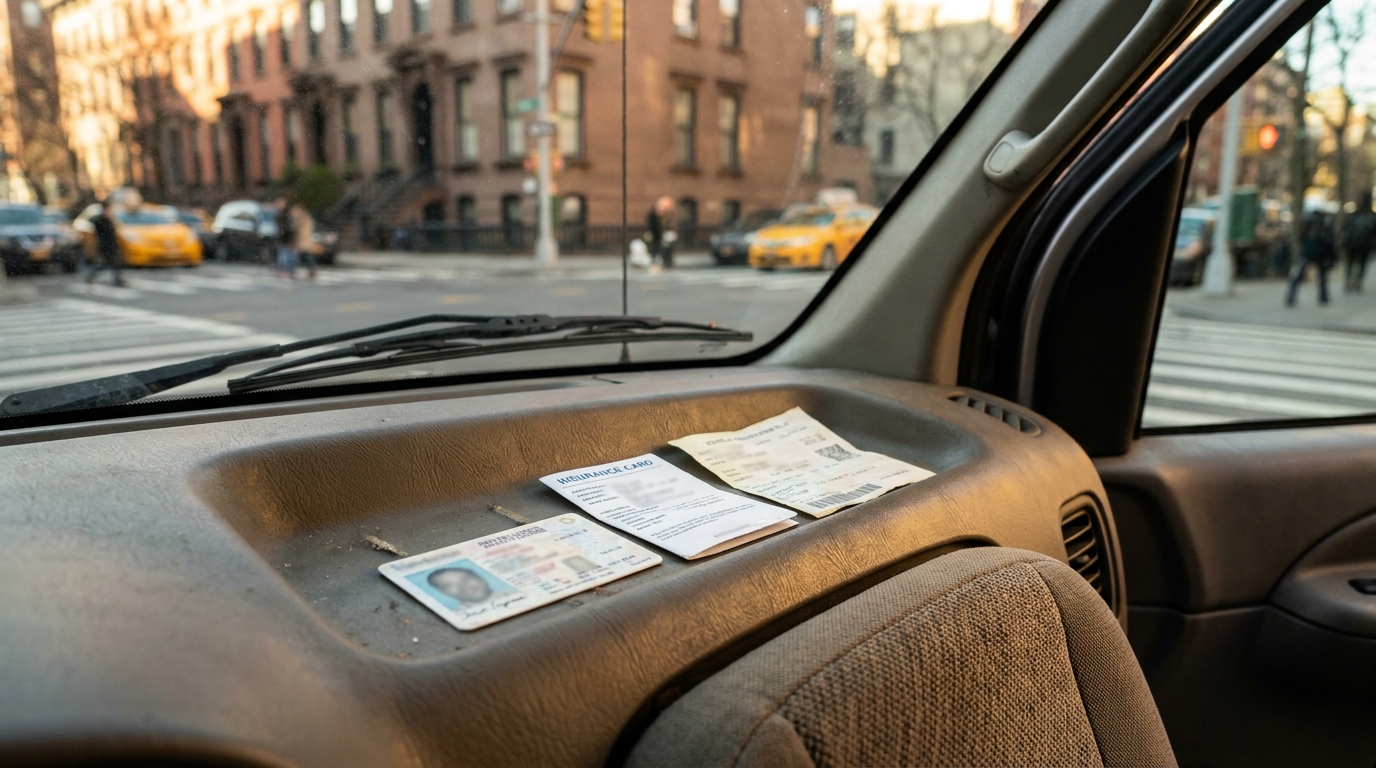
At a minimum, New York drivers are legally required to exchange identifying and insurance information after any crash. This duty applies even if the crash involves only property damage. Photograph the other party’s documents and capture scene evidence.
Focus on gathering:
- The other driver’s full name, address, and phone number
- Driver’s license number and state of issue
- Vehicle make, model, year, color, and license plate number
- Insurance company name and policy number
- Names and contact details of any witnesses
💡 Pro Tip: Photograph the other driver’s license and insurance card directly rather than copying details by hand. A clear image reduces transcription errors that insurers sometimes exploit.
Knowing What to Do After a Car Accident in New York
A calm, methodical response at the scene supports both your safety and your eventual claim. New York’s no-fault framework rewards drivers who document carefully, because that paperwork often determines which policy pays first.
Keep Communication Factual
Avoid admitting fault, even casually, while you are still at the scene. Apologies and self-blame can carry unintended weight. Keep it simple with "Let’s exchange information." Stick to neutral, factual exchanges and let the investigation establish responsibility. Careful NYC crash documentation, including photos and witness names, often speaks more persuasively than anything said in the moment.
Render Reasonable Assistance
Your obligations extend beyond swapping paperwork when someone is hurt. Drivers must provide "reasonable assistance" to anyone injured, typically by calling 911 for medical help. Prompt medical attention protects injured people and creates an early record connecting injuries to the crash.
Your Legal Duties at the Scene
New York law requires drivers to stop and remain at the scene after a collision. Drivers must stop their vehicle as close to the scene as safely possible. Leaving is known as a hit-and-run and carries severe penalties, including fines, license suspension, and potential jail time. These consequences increase significantly when injuries or fatalities are involved.
Reporting duties may continue after you leave the scene. Notify your own insurer, because the policy typically requires prompt notice. New York also requires you to file a written accident report (Form MV-104) with the DMV within 10 days when property damage to any one person’s property exceeds $1,000, or when anyone is injured or killed.
💡 Pro Tip: Treat your insurer notification and any DMV filing as separate tasks with their own deadlines. Missing one does not excuse the other, and both can affect your claim.
How No-Fault Coverage Shapes the Exchange
New York operates under a no-fault auto insurance system, making your own policy information just as important as the other driver’s. After a crash, injured parties first file claims with their own insurer regardless of fault. Under New York’s no-fault first-party benefits statute, every owner’s policy must provide payment of first party benefits to persons, other than occupants of another motor vehicle or a motorcycle, for loss arising from the use or operation in this state of such motor vehicle. Because your policy is usually your first source of medical reimbursement, exchanging your own information is essential (NY Ins. Law § 5103(a)).
No-fault coverage reaches further than many drivers realize. Under NY Insurance Law § 5103(a)(2), no-fault coverage extends to the named insured and members of his household, other than occupants of a motorcycle, for loss from an uninsured motor vehicle or motorcycle. Under § 5103(a)(4), a death benefit of two thousand dollars is provided to the estate of any covered person (other than an occupant of another motor vehicle or a motorcycle) arising out of the use or operation of such motor vehicle.
When the Other Driver Flees or Is Uninsured
A hit-and-run or uninsured driver does not necessarily leave you without options. The Motor Vehicle Accident Indemnification Corporation, or MVAIC, was created to fill these gaps. New York’s legislature recognized that the financial security act fails to accomplish its full purpose of securing to innocent victims recompense for injury and financial loss, particularly in accidents caused by unidentified motor vehicles which leave the scene and uninsured vehicles (NY Ins. Law § 5201(b)).
MVAIC claims are generally more burdensome than standard claims, which is why scene documentation is valuable. If a driver flees and cannot be identified, you may still be eligible for no-fault benefits through MVAIC, but recording the fleeing vehicle’s plate, make, model, and witness contacts strengthens that claim. MVAIC eligibility carries strict conditions and short notice deadlines, including prompt police reporting. Thorough records reduce the chance you face a complex MVAIC process instead of a straightforward NYC accident claim.
| Situation | Likely First Source of Recovery |
|---|---|
| Both drivers insured | Your own no-fault PIP, then liability claim |
| Other driver uninsured | Your UM coverage or MVAIC |
| Hit-and-run, driver unidentified | MVAIC, supported by scene documentation |
Insurance Disclosure Once a Lawsuit Begins
If your case proceeds to litigation, New York law requires defendants to disclose detailed insurance information. Under New York’s civil disclosure rules, no later than ninety days after service of an answer a defendant must provide proof of any insurance agreement in the form of a policy copy, including the total limits available, meaning the actual funds, after erosion and offsets, that can satisfy a judgment. Disclosure of those limits is not an admission that the injury is covered (NY CPLR § 3101(f)).
Under NY CPLR § 3101(f)(2), a defendant must make reasonable efforts to ensure insurance disclosure information remains accurate and complete, and must provide updated information at the filing of the note of issue, when entering into any formal settlement negotiations conducted or supervised by the court, at a voluntary mediation, when the case is called for trial, and for sixty days after any settlement or entry of final judgment inclusive of all appeals. Additionally, NY CPLR § 3101(g) requires full disclosure of any written accident report prepared in the regular course of business, unless prepared by police for criminal investigation.
Deadlines and Why Documentation Endures
The time to act on a New York auto accident injury claim is limited. Generally, the deadline to file a personal injury lawsuit is three years from the date of the crash under NY CPLR § 214. A discovery-based start date applies only where a specific statute makes discovery the trigger, such as latent toxic exposure under § 214-c, not typical trauma injuries. Where such a statute applies, § 203(g)(1) allows the period to be computed from when facts were discovered or could with reasonable diligence have been discovered, giving parties two years after such discovery or the period otherwise provided, whichever is longer (NY CPLR § 203(g)(1)).
Thorough records at the scene preserve evidence that may matter long after the crash. Because the full extent of injuries is not always immediately clear, careful documentation protects your ability to prove causation and damages later. Working with a knowledgeable car accident lawyer New York residents trust can help you preserve those claims and meet every deadline.
💡 Pro Tip: Keep a dated journal of symptoms and treatment after a crash. If a delayed injury surfaces, contemporaneous notes can help establish when problems began.
Frequently Asked Questions
-
What information am I legally required to exchange after an NYC crash?
You must provide your name, address, license, vehicle registration, and insurance details to other drivers involved. Under New York law, even if the crash involves only property damage, you must exchange information. Collecting the same details from them protects your claim.
-
Do I still have to report a minor accident to my insurer?
Yes, notifying your insurer is wise even for minor crashes. Your policy protects you through uninsured and underinsured motorist coverage, and most policies require prompt notice.
-
What happens if the other driver flees the scene?
You may pursue benefits through MVAIC if the at-fault driver cannot be identified. This process is more demanding than a standard claim with strict notice deadlines, so documenting the fleeing vehicle’s plate, make, model, and witness information strengthens your position.
-
Should I apologize or explain what happened at the scene?
Keep communication factual and avoid admitting fault. Statements like an apology can be used by the other driver’s insurer to suggest negligence, so limit conversation to exchanging information.
-
How long do I have to file an injury lawsuit in New York?
The general deadline is three years from the date of the accident under NY CPLR § 214. A discovery exception may apply in narrow, statute-specific situations, but courts read it narrowly, so timely legal guidance is important.
Protecting Your Rights From the Scene Forward
Exchanging accurate information after an NYC collision is the foundation of every strong injury claim. From recording the other driver’s insurance details to documenting the scene and notifying your own insurer, each step preserves benefits and evidence you may rely on later. New York’s no-fault rules, MVAIC protections, and disclosure statutes all reward drivers who act carefully.
If you were injured in a crash and want guidance you can trust, the attorneys at The Newman Firm are here to help you pursue full and fair compensation. Call (718) 896-2700 or send us a message online to schedule a consultation and protect your claim today.