
How Lost Vehicle Value Works After a NYC Car Crash
Key Takeaways: A diminished value claim after a car accident in New York asks for payment for the market value your car loses because of its accident history, even after quality repairs. In New York, this loss is generally treated as part of a car accident property damage claim. You may seek it from the at-fault driver or their liability insurer, not through no-fault benefits. Some New York laws, such as the car-sharing law in NY Gen. Bus. Law § 913, recognize that a single accident can greatly reduce a vehicle’s value, but they do not create a general right to diminished value in every crash. A strong claim usually depends on proof such as damage photos, repair invoices, vehicle history reports and an independent appraisal. Comparative fault under NY CPLR § 1411 may reduce your recovery, and collateral source rules under NY CPLR § 4545(a) may also affect it. Most claims settle through negotiation, but filing deadlines still apply, and signing a broad property damage release could end your ability to recover lost value.
A diminished value claim is a request for payment covering the market value your car loses because it now has an accident history, even after quality repairs. Picture two identical cars. The one with a crash on its record will usually sell for less. In New York, this loss is generally treated as part of car accident property damage, and you may be able to seek it from the at-fault driver or their insurer. Whether you can recover it depends on the facts, the evidence and the insurance policies involved.
If a crash has left you with a damaged car, injuries, or both, getting help early may protect your options. The Newman Firm helps accident victims across Queens and New York City. Call (718) 896-2700 or contact us now to talk about your situation.
The Diminished Value Definition and Why It Matters
The diminished value definition comes from a basic legal idea called "diminution in value." Legal sources describe diminution in value as the drop in a property’s market value caused by an injury, defect, or breach. Courts often use it to measure damages in injury and contract cases.
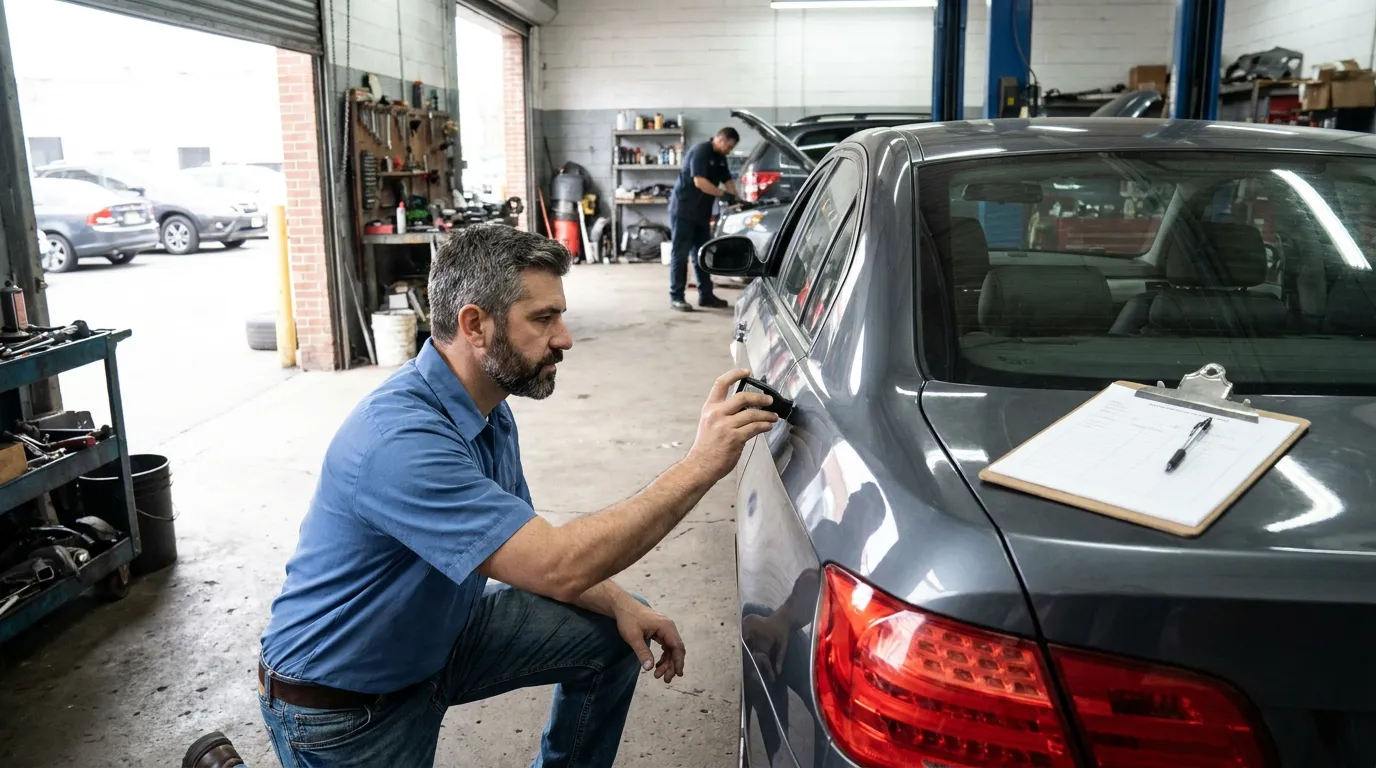
This matters because a repair bill does not always make an owner whole. A body shop can fix the dents and replace the parts. It cannot remove the crash from vehicle history reports, and many buyers and dealers take that history into account. The gap between what the car was worth before the crash and after repairs is often called post-repair value loss.
Inherent Versus Repair-Related Value Loss
Diminished value usually comes in two forms. Inherent diminished value is the stigma tied to an accident history, even when the repair work was excellent. Repair-related diminished value comes from poor work, mismatched paint, or non-original parts. You may need different proof for each, and you may also pursue repair-related losses as a claim for corrective repairs.
Does New York Law Recognize That a Crash Can Lower a Car’s Value?
New York laws do recognize that a single accident can reduce a vehicle’s value, though only in narrow settings. One example comes from the state’s car-sharing law. NY Gen. Bus. Law § 913(b)(5)(a) separates "normal wear and tear" from damage that "materially diminishes the value of the vehicle" and comes from a specific occurrence or accident.
That same law also uses the car’s market value before the damage as a benchmark. Under NY Gen. Bus. Law § 913(b)(5)(b), a car-sharing driver’s liability cannot exceed the lesser of the actual and reasonable repair costs or the vehicle’s fair market value just before the damage, minus net disposal proceeds. Section 913 applies only to car-sharing programs. It does not create a general right to diminished value in every New York car accident, but it shows that New York law treats pre-accident market value as a meaningful benchmark.
How Courts Choose a Measure of Damages
In property damage disputes, New York courts generally measure damages by either the reasonable cost of repair or the drop in market value. They often allow whichever amount is less. When repairs fully restore the car’s worth, repair cost is usually the right measure. When they do not, an owner may argue that lost market value better reflects the harm. Courts and insurers have not treated post-repair diminished value the same way every time, so outcomes depend heavily on the facts and the evidence.
Building a Strong Diminished Value Claim in New York
A successful diminished value claim in New York generally depends on proof, not assumptions. Insurers rarely pay for lost value just because an owner asks. You will usually need to show what the car was worth before the crash, what it is worth after repairs, and that the accident caused the difference.
New York’s car-sharing law offers a useful model for the kind of evidence that carries weight. Before a car-sharing program can collect for damage, NY Gen. Bus. Law § 913(b)(5) requires an estimate from a repair company or appraiser, copies of that estimate and photos on request, and a reasonable claim reflecting the actual damage. Those rules apply only to car-sharing, but similar proof often helps in any property damage claim. Helpful evidence may include:
- Photos of the damage taken at the scene and before repairs
- Detailed repair estimates and final invoices
- An independent post-repair appraisal comparing pre- and post-accident value
- Vehicle history reports showing the accident on record
- Maintenance records showing the car’s condition before the crash
💡 Pro Tip: Ask your appraiser to explain their method in writing. An appraisal that shows its comparisons and reasoning is harder for an insurer to dismiss than a single number with no support.
What Costs Can a Car Accident Property Damage Claim Include?
A car accident property damage claim may cover more than repairs and lost value. Depending on the facts and the policies involved, owners sometimes seek several kinds of losses.
| Type of Loss | What It Covers | Key Consideration |
|---|---|---|
| Repair costs | Parts and labor to fix the vehicle | Estimates and invoices are central |
| Diminished value | Market value lost because of accident history | Usually requires an appraisal |
| Total loss value | Pre-accident fair market value if repair is not practical | Salvage value may be deducted |
| Travel-related costs | Rental car or loss of use, transportation, lodging | Recovery depends on the claim and the coverage |
New York’s insurance definitions also address some travel-related losses. NY Ins. Law § 1113(a)(19) defines motor vehicle physical damage insurance as covering loss of or damage to motor vehicles from any cause. It also allows coverage that reimburses a driver for a rental car, commercial transportation and lodging after an accident a set distance from home. Whether you have that coverage depends on your policy. Collision and comprehensive coverage fall within this category, which is separate from no-fault injury benefits.
Why Vehicle Damage Is Separate From Injury Benefits
Property damage and personal injury generally follow different paths in New York. No-fault benefits generally cover medical bills, lost earnings and certain other injury-related costs, not damage to your car. You typically bring a claim for lost vehicle value against the at-fault driver or their liability coverage. If you were also hurt, a NYC car crash lawyer can help you handle both claims at the same time.
Factors That May Reduce Your Recovery
Several rules may lower what you recover, even when your diminished value claim is valid.
Comparative fault is one of the most important. Under New York’s pure comparative negligence rule in NY CPLR § 1411, being partly at fault does not bar recovery for property damage. Instead, your recovery, including lost value, shrinks in proportion to your share of fault. NY CPLR § 5041(a) addresses how set-offs, credits and comparative negligence apply when certain judgments are structured.
Payments from other sources may also matter. Under NY CPLR § 4545(a), in actions seeking certain economic losses, courts may consider evidence that a collateral source has paid or will pay those costs and may reduce the award to match. Collision payments from your own insurer often carry subrogation rights, which can affect how this rule applies.
Settlement Versus Litigation
Most diminished value claims settle through negotiation, not trial. Even so, filing deadlines still apply, and waiting too long could put your claim at risk. Negligence-based property damage claims in New York generally have a three-year deadline under CPLR § 214. Shorter notice deadlines may apply to claims against government entities, and courts read exceptions narrowly.
💡 Pro Tip: Read any property damage release carefully before you sign it. Some releases are worded broadly enough to cover diminished value, which could end your ability to pursue it later.
Frequently Asked Questions
-
What is diminished value in simple terms?
Diminished value is the drop in your car’s market value caused by an accident, even after repairs. Buyers often pay less for cars with a recorded crash history, and you may be able to recover that difference in some cases.
-
Can I file a diminished value claim against my own insurer?
It depends on your policy language. Many standard collision policies cover only repair or replacement and do not pay for diminished value. Owners most often bring diminished value claims against the at-fault driver or their insurer.
-
Do I need an appraisal?
The law does not require an appraisal in every case, but it is often the most persuasive proof of lost value. Insurers often expect independent support before they will negotiate.
-
Does being partly at fault end my claim?
Generally, no. Under New York’s comparative negligence rule in NY CPLR § 1411, your share of fault may reduce your recovery rather than bar it.
-
Is lost vehicle value covered by no-fault insurance?
No-fault benefits generally cover injury-related economic losses, not vehicle damage. You usually pursue lost value as a separate property damage claim.
Protecting Your Car’s Value After a New York Car Crash
A crash can cost you money long after the repairs are done, and New York law may offer ways to pursue that loss, depending on the facts. A successful claim usually depends on solid appraisals, careful records and an understanding of rules such as comparative fault and collateral source offsets. For more on crash-related issues, see our New York car accident resources.
If your car lost value or you were injured in a crash, you do not have to deal with insurers on your own. The Newman Firm is ready to review your situation. Call (718) 896-2700 or schedule your consultation today.
Disclaimer: This content is for informational purposes only and is not legal advice. Every case is unique, and results may vary. Consult an attorney about your specific circumstances.