

The Hidden Witness Inside Your Car After an NYC Collision
Key Takeaways: Black box data is the crash record captured by a vehicle’s event data recorder, preserving speed, braking, throttle, steering, seat belt status, and airbag timing in the seconds surrounding impact. In NYC crashes where driver accounts conflict, this objective data may support fault arguments by tying recorded inputs to legal elements like breach of duty and causation. Under New York’s comparative negligence rules, shifting fault allocation by even a few percentage points can change recovery. The data requires expert interpretation and works alongside police reports, video, and reconstruction testimony. Access can require consent, a court order, or joint inspection protocol, and EDR memory may be overwritten when vehicles are repaired, sold, or scrapped. Deadlines are unforgiving, particularly the 90-day notice requirement for municipal defendants and the two-year wrongful death window, making prompt preservation critical.
Black box data is crash information automatically recorded by a vehicle’s event data recorder (EDR), a small module that captures the seconds surrounding an impact. A typical download includes pre-impact speed, throttle position, brake application, steering input, seat belt status, and airbag deployment timing. In New York City crashes, where drivers frequently give conflicting accounts and witnesses scatter quickly, this objective data can carry substantial weight in determining fault.
If you were seriously injured in a Queens or NYC crash and believe vehicle data could support your account, The Newman Firm is available to discuss your situation. Call (718) 896-2700 or reach out to our team now to talk through your options before critical evidence disappears.
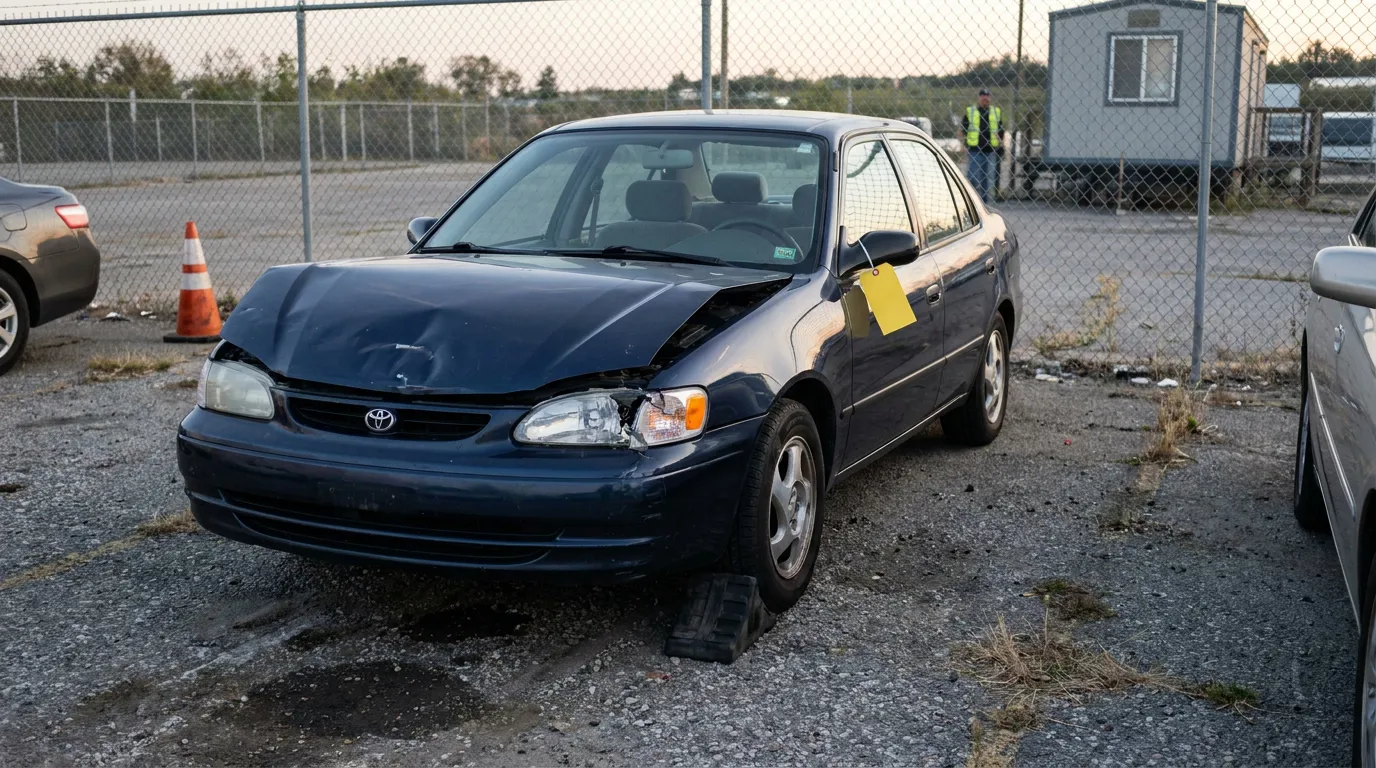
How an Event Data Recorder Actually Captures a Crash
Modern vehicles continuously monitor operating inputs, but they generally preserve only a snapshot when a triggering event occurs. Most EDRs record a short buffer of data, often around five seconds before impact and a fraction of a second after, locking that record when an airbag deploys or sensors detect significant deceleration. Non-deployment events may be stored only temporarily.
Technical capabilities vary by manufacturer, model year, and module design. Some vehicles capture detailed multi-channel data; others record a narrow set of parameters. Commercial trucks, buses, and fleet vehicles frequently carry additional telematics systems that log GPS position, hard-braking alerts, and hours of operation.
What Black Box Data Commonly Shows
- Vehicle speed in the seconds before impact
- Whether and when the driver applied the brakes
- Throttle or accelerator pedal position
- Steering wheel angle and any evasive maneuver
- Seat belt buckle status for front occupants
- Airbag deployment timing and change in velocity (delta-V)
Each data point may connect to a legal element. Speed and braking can speak to breach of duty. Delta-V and seat belt status often inform causation and injury mechanism arguments, though in New York seat belt nonuse is generally admissible only on damages mitigation rather than fault. A qualified reconstruction engineer must interpret the download, because raw data without context can be misread.
Why a Black Box Data Car Accident Claim Can Change the Outcome
New York’s comparative negligence framework makes precise fault percentages financially meaningful. Under NY CPLR § 1411(a), culpable conduct attributable to the claimant generally does not bar recovery in most personal injury cases; instead, damages are diminished in proportion to that conduct. However, as of May 26, 2026, a new CPLR § 1411(b) applies to motor vehicle personal injury cases subject to Article 51 of the Insurance Law: if a plaintiff’s fault exceeds the combined fault of the defendants, recovery is barred entirely. New York therefore now applies a modified comparative negligence standard, with a greater-than-50% cutoff, for car accident cases commenced on or after May 26, 2026.
That structure is why EDR evidence in New York can carry outsized value. Under the comparative negligence rule, objective speed or braking data can meaningfully influence fault allocation. Shifting an allocation by even a few percentage points can materially change a recovery, and under the modified standard now applicable to motor vehicle cases, keeping a plaintiff’s fault at or below 50% may determine whether recovery is possible at all.
Comparative fault is also generally treated as an affirmative defense. CPLR Article 14-A pairs § 1411 with § 1412, which places the burden of pleading and proving culpable conduct on the party asserting it. When a defense insurer claims you contributed to the crash, vehicle data may help undercut that assertion with recorded inputs rather than competing recollections.
Getting the Data: Preservation and Discovery in New York
The greatest practical risk is that the data disappears before anyone demands it. EDR memory can be overwritten by subsequent ignition cycles, and vehicles are frequently repaired, sold, or scrapped within weeks. A prompt spoliation or preservation letter directed to the vehicle owner, insurer, and salvage yard can be the difference between usable evidence and none at all.
New York’s discovery framework generally supports obtaining crash evidence once litigation is underway. CPLR 3101(g) provides for full disclosure of any written accident report prepared in the regular course of business operations. Other provisions support demands for documents and inspection of tangible items.
Ownership, Consent, and Practical Obstacles
Access is rarely as simple as plugging in a tool. The vehicle owner generally controls the data, and New York Vehicle and Traffic Law restricts retrieval without the owner’s consent or legal authorization, so a download from an adverse driver’s car typically requires consent, a court order, or a negotiated joint inspection protocol. Where the vehicle is in a salvage yard or police impound, additional permissions may apply.
💡 Pro Tip: Photograph the other vehicle’s make, model, year, and VIN at the scene if it is safe to do so. Identifying the exact module often determines whether a download is technically possible and which imaging tool is required.
For a broader checklist of what to protect immediately, review our guide on evidence to preserve after a crash, since black box data is only one component of a complete record.
Deadlines That Quietly Control Your Access to Crash Data
Filing deadlines set the outer boundary for using EDR evidence, and some are far shorter than people expect. The chart below summarizes several timelines under New York law, though exceptions, tolling provisions, and shorter deadlines for public entities can apply.
| Claim Type | General Deadline | Authority |
|---|---|---|
| Personal injury | 3 years from the crash | CPLR § 214(5) |
| Property damage | 3 years from the crash | CPLR § 214(4) |
| Product liability (vehicle defect) | 3 years from injury | CPLR § 214(5) |
| Wrongful death | 2 years from death | EPTL 5-4.1 |
| NYC defendant | 90-day notice of claim; 1 year and 90 days to sue | General Municipal Law §§ 50-e, 50-i |
| NY State defendant (Court of Claims) | 90 days to serve claim or notice of intention | Court of Claims Act § 10 |
Claims involving a city bus, sanitation truck, or other municipal vehicle deserve immediate attention. Actions against New York City generally require a notice of claim within 90 days and suit within one year and 90 days, while claims against New York State are brought in the Court of Claims under its own 90-day filing rules. Missing the notice step can foreclose an otherwise viable case.
Fatal crashes generally carry a tighter civil window of two years from the date of death, with shorter notice deadlines against public entities. That compressed period makes early preservation of crash data especially urgent for families, because the vehicle may already be gone by the time an estate representative is appointed.
Where Black Box Evidence Fits Within New York No-Fault
New York’s no-fault system generally pays initial benefits without regard to who caused the crash. Insurance Law § 5102(a) defines basic economic loss as up to fifty thousand dollars per person for combined medical and hospital expenses, lost earnings of 80 percent of monthly earnings up to two thousand dollars per month for up to three years, and other reasonable expenses. Fault becomes the central question only when a claimant seeks damages beyond those limits and can establish a "serious injury" as defined in Insurance Law § 5102(d).
Documentation drives the no-fault process. Insurance Law § 5106(a) provides that first-party benefits are overdue if not paid within thirty days after the claimant supplies proof of the fact and amount of loss sustained, and overdue payments bear interest at two percent per month. Objective crash data may help establish the factual record quickly, though timely notice, prescribed claim forms, and medical proof remain essential.
When Manufacturers Enter the Picture
Sometimes the recorded data points at the vehicle rather than the driver. If an EDR download suggests brakes were applied but deceleration never followed, or that a restraint system failed, a defect-based product liability claim may warrant investigation, generally within the three-year personal injury period in CPLR § 214(5). Such claims require engineering analysis beyond the download alone.
Frequently Asked Questions
1. Does every car in New York have a black box?
No. EDRs are common in vehicles built over roughly the past two decades, but capabilities differ substantially by manufacturer and model year.
2. Can I get the other driver’s black box data?
Generally not without consent or a court order, because the vehicle owner typically controls the data and state law restricts unauthorized retrieval. In litigation, New York’s discovery rules provide a mechanism to seek inspection.
3. Will black box data alone prove the other driver was at fault?
Rarely on its own. Courts consider EDR downloads alongside police reports, scene photographs, surveillance video, and reconstruction testimony. The data can be powerful corroboration, not an automatic verdict.
4. What if the data shows I was partly at fault?
Under New York’s comparative negligence framework, partial fault reduces damages proportionally. However, for motor vehicle accident cases commenced on or after May 26, 2026, a plaintiff whose fault exceeds the combined fault of the defendants may be barred from recovery entirely, making fault allocation especially significant.
5. How quickly should I act to preserve the data?
As soon as possible, often within days. Vehicles get repaired, sold, or destroyed, and memory can be overwritten by continued driving.
Turning Recorded Data Into a Documented Case
Black box data may offer something rare in a disputed NYC collision: a contemporaneous, machine-generated record of what the vehicles were doing before impact. Under New York’s comparative negligence framework, where every percentage point of fault can translate directly into dollars, and where fault allocation above 50% can now bar recovery entirely in motor vehicle cases commenced on or after May 26, 2026, that objectivity may meaningfully influence how a claim resolves. The practical challenge is often not whether the data helps, but whether anyone secures it before it is lost.
If a serious crash has left you or your family facing an uphill fight with an insurer, a black box car accident lawyer NYC residents turn to can help evaluate whether vehicle data may support your claim. Contact The Newman Firm online or call (718) 896-2700 today, and visit our website to learn more about how we approach NYC auto accident evidence.
Disclaimer: This content is for informational purposes only and is not legal advice. Every case is unique, and results may vary. Consult an attorney about your specific circumstances.