

How NYC Admin Code § 7-210 Shapes Sidewalk Fall Claims for Injured New Yorkers
If you slipped and fell on a broken or icy sidewalk in New York City, a single provision of the city’s Administrative Code may determine who pays for your injuries. NYC Admin Code § 7-210 governs liability when someone is hurt due to a poorly maintained sidewalk. Enacted in 2003 at Mayor Bloomberg’s urging, this law shifted responsibility for sidewalk conditions from the City of New York to abutting private property owners. For anyone pursuing a sidewalk fall claim in New York, understanding this law is critical to recovering the compensation you deserve.
If you were recently hurt in a fall accident in NYC, The Newman Firm is ready to help. Call 718-896-2700 or reach out online to discuss your case today.
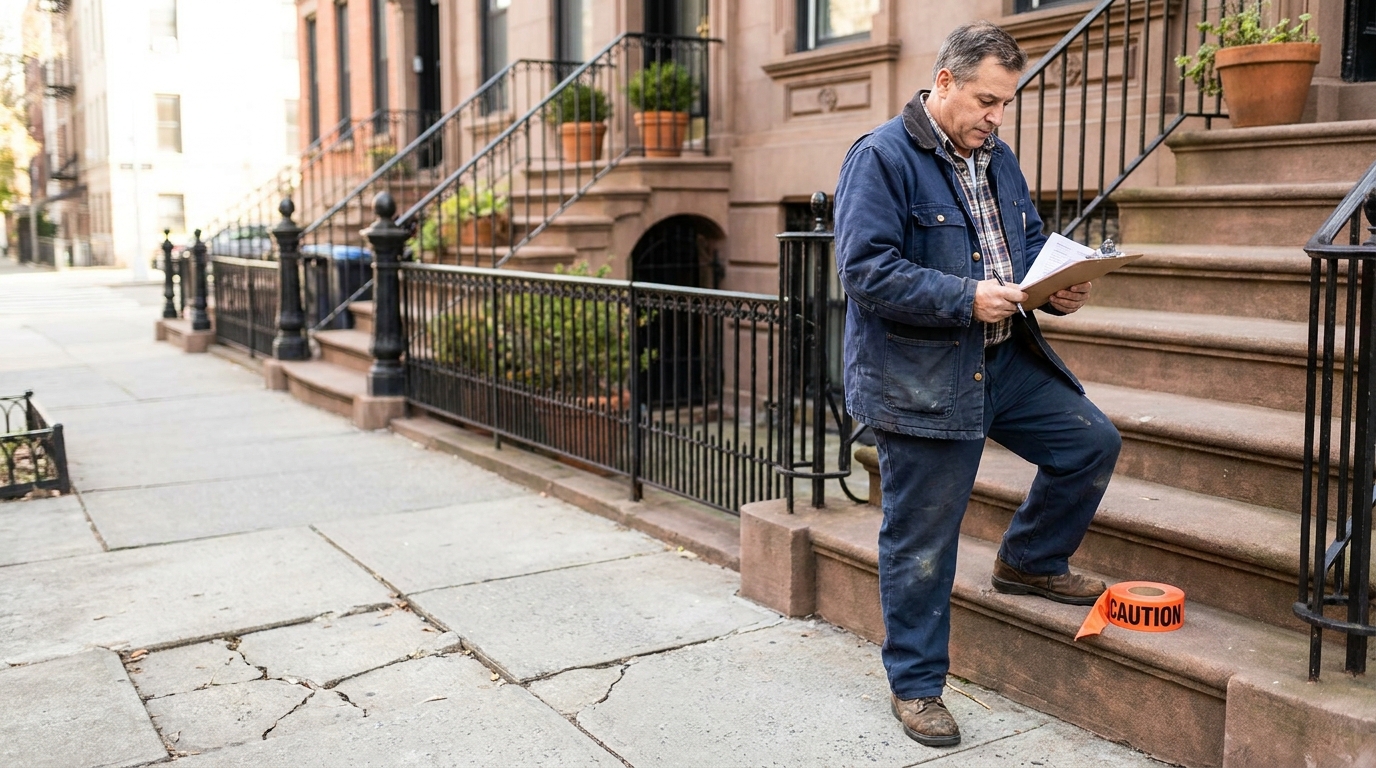
What NYC Admin Code § 7-210 Actually Does
NYC Admin Code § 7-210 establishes the liability of real property owners for failure to maintain the sidewalk abutting their property in a reasonably safe condition. Before 2003, the City generally bore responsibility for sidewalk injuries. Section 7-210 removed City liability for sidewalk trips and falls and placed it on abutting landowners. If a cracked, uneven, or ice-covered sidewalk causes you to fall, your personal injury claim will generally be directed at the property owner rather than the municipality.
The Nondelegable Duty Standard
The New York Court of Appeals has confirmed that § 7-210 imposes a nondelegable duty on property owners to maintain abutting sidewalks. This powerful legal concept means a property owner cannot escape liability by hiring a management company or signing a lease that shifts maintenance duties to a tenant. Even out-of-possession landlords remain liable under § 7-210, regardless of lease agreements delegating sidewalk maintenance to tenants. This nondelegable duty strengthens your ability to hold the right party accountable.
Who Qualifies as a Liable Property Owner
Not every property owner falls under § 7-210, and there are two important exceptions. The City retains liability if the City itself is the landowner. The City also remains liable if the abutting property is a one-to-three family residential home that is, in whole or in part, owner-occupied and used exclusively for residential purposes. Outside these exceptions, commercial property owners, landlords of larger residential buildings, and other private landowners generally bear full responsibility for sidewalk conditions.
💡 Pro Tip: If you fell on a sidewalk in NYC, document the address immediately. Knowing whether the abutting property is a small owner-occupied home or a commercial building can determine which party you pursue.
Proving Negligence in a Personal Injury Lawyer in New York City Sidewalk Case
Property owners under § 7-210 are not strictly liable for every sidewalk fall. The statute follows traditional negligence principles, requiring you to prove four elements: duty, breach, proximate causation, and damages. The property owner owed a duty to maintain the sidewalk safely, breached that duty by allowing a dangerous condition to exist, that breach caused your fall, and you suffered actual injuries.
Notice Requirements: What the Property Owner Knew
A key factor in any premises liability NYC case is whether the property owner had notice of the dangerous condition. Private landowners are not required to have prior written notice. Actual or constructive notice suffices. Constructive notice means the defect existed long enough that the owner should have discovered and remedied it through reasonable diligence. This differs from claims against the City, which under NYC Administrative Code § 7-201(c)(2) requires at least one of the following: (1) written notice of the specific defect actually given to the Commissioner of Transportation or an authorized designee; (2) a prior injury at the same location followed by written notice to a city agency; or (3) written acknowledgment by the City of the defective condition and the City’s failure to remedy it within 15 days. These are alternative pathways rather than cumulative requirements.
💡 Pro Tip: Photograph the sidewalk defect from multiple angles, measure it if possible, and note whether the condition appears longstanding (worn edges, moss, accumulated debris). This evidence can establish constructive notice.
The Trivial Defect Defense
Property owners frequently argue that the sidewalk defect was too minor to create liability. New York courts use a totality of the circumstances test rather than a bright-line size measurement. Courts examine the width, depth, elevation, irregularity, and appearance of the defect along with the time, place, and circumstance of the injury. A seemingly small defect can still support a valid claim depending on surrounding conditions like poor lighting or pedestrian congestion. Learn more about how courts apply the trivial defect doctrine to sidewalk cases.
How Snow and Ice Claims Fit Under Property Owner Liability NY
Winter conditions create some of the most common sidewalk fall claims in New York City. The duty imposed by § 7-210 includes the negligent failure to remove snow and ice from sidewalks. Property owners must clear snow and ice within a reasonable time after a storm ends. If a property owner fails to do so and you slip on an icy sidewalk, you may have a viable negligence claim. NYC Administrative Code § 19-152 further outlines property owner obligations regarding sidewalks and lots, complementing § 7-210.
💡 Pro Tip: After a snow or ice fall, get medical attention right away and preserve your footwear. The shoes you wore may become relevant evidence regarding traction and conditions.
Filing Deadlines and the Statute of Limitations for a Sidewalk Fall Claim New York
Time limits are among the most important factors in any personal injury NY case. For sidewalk fall claims against private property owners in New York City, injured victims generally have three years from the date of injury to file a lawsuit. Missing this deadline can permanently bar your claim, regardless of how strong your evidence is.
For sidewalk fall claims in New York, the statute of limitations generally runs from the date of injury under CPLR § 214. CPLR § 203(g) is a method-of-computation rule that applies when another statute provides for a discovery-based accrual period and does not itself create a discovery rule or independent tolling for ordinary personal injury claims. Limited tolling exceptions (for example, infancy or incapacity under CPLR § 208) may apply in narrow circumstances and are interpreted strictly by courts. Relying on the discovery rule without legal guidance carries significant risk. The New York statute of limitations framework provides additional context on filing deadlines.
💡 Pro Tip: Even though the statute of limitations may allow up to three years, evidence deteriorates over time. Witnesses forget details, surveillance footage gets deleted, and sidewalk conditions change. Acting quickly strengthens your case.
Insurance Disclosure and Recovering Compensation From a Personal Injury Lawyer in New York City Claim
In a sidewalk fall claim under § 7-210, the at-fault property owner’s liability insurance coverage is often central to your ability to recover compensation. Under NY CPLR § 3101(f), as amended by the Comprehensive Insurance Disclosure Act, any defendant must automatically provide the plaintiff with a copy of all potentially applicable insurance policies, including primary, excess, and umbrella coverage, no later than 90 days after service of an answer. This statutory disclosure requirement helps injury victims assess the full scope of available compensation early in the litigation process.
Understanding who holds the insurance policy and what it covers can influence settlement strategy and litigation decisions.
| Claim Factor | Private Property Owner (§ 7-210) | City of New York |
|---|---|---|
| Liability basis | Nondelegable duty to maintain sidewalk | Retained only if City is landowner or small residential exception applies |
| Notice requirement | Actual or constructive notice | Prior written notice to DOT required under § 7-201(c)(2) |
| Statute of limitations | Generally 3 years | Shorter notice-of-claim deadlines apply |
| Snow/ice duty | Must remove within reasonable time | City liable only where it is the property owner |
| Insurance disclosure | CPLR § 3101(f) applies | Government claims process applies |
What to Do After a Fall Accident NYC Residents Should Know
The steps you take immediately after a sidewalk fall can significantly affect the outcome of your claim. If able, document the scene with photographs, collect witness contact information, and seek medical attention immediately. Report the incident to the property owner or building manager if you can identify them. Keep records of all medical treatment, lost wages, and expenses related to your injuries. Learn more about who is responsible for a slip and fall injury in NYC to protect your rights from the start.
- Document the defect with photos and video before repairs
- Obtain a copy of any incident or accident report filed at the scene
- Seek medical evaluation promptly, even if injuries seem minor
- Preserve clothing and footwear worn at the time of the fall
- Contact a personal injury lawyer in New York City to evaluate your claim
💡 Pro Tip: Request a copy of the property’s sidewalk violation history from NYC DOT. Prior violations or complaints about the same defect can serve as powerful evidence of the owner’s notice and failure to act.
Frequently Asked Questions
1. Does NYC Admin Code § 7-210 make property owners automatically liable for sidewalk falls?
No. Section 7-210 does not impose strict liability. Property owners are held to a traditional negligence standard, requiring proof that the owner had a duty, breached that duty, and that the breach proximately caused the plaintiff’s injuries. The injured person must demonstrate that the owner knew or should have known about the dangerous condition.
2. Can a landlord avoid liability by requiring tenants to maintain the sidewalk?
Generally, no. The Court of Appeals has held that § 7-210 imposes a nondelegable duty, meaning property owners cannot transfer this obligation to tenants or third parties through lease agreements. Even out-of-possession landlords remain liable.
3. How long do I have to file a sidewalk injury claim in New York City?
For claims against private property owners, the statute of limitations is generally three years from the date of injury (CPLR § 214). Claims involving municipal entities may have shorter deadlines, including notice-of-claim requirements. CPLR § 203(g) is a computation rule and does not itself create tolling; limited tolling exceptions (e.g., infancy or incapacity under CPLR § 208) may apply but are interpreted narrowly.
4. What if the sidewalk defect was very small?
New York courts do not use a fixed size threshold. They apply a totality of the circumstances test that considers the defect’s dimensions, surrounding conditions, and context of the injury. Even a relatively small defect may support liability depending on the facts.
5. Are homeowners of small residential properties liable under § 7-210?
Not in all cases. The statute contains an exception for one-to-three family residential properties that are, in whole or in part, owner-occupied and used exclusively for residential purposes. If the property meets these criteria, the City may retain liability.
Protecting Your Rights After a NYC Sidewalk Injury
NYC Admin Code § 7-210 provides an important legal pathway for people injured on poorly maintained sidewalks in New York City. By shifting liability to private property owners and imposing a nondelegable duty, the law strengthens the position of injured pedestrians seeking compensation. Successfully pursuing a claim requires timely action, proper evidence preservation, and understanding of the negligence framework, notice requirements, and filing deadlines. Every sidewalk fall involves unique facts, and outcomes depend on the specific circumstances.
If you or a loved one was injured in a sidewalk fall in New York City, The Newman Firm can help you understand your legal options. Call 718-896-2700 or contact us today to schedule a consultation and take the first step toward pursuing the compensation you deserve.