

Falling on Snow and Ice in New York: Why Timing Can Decide Your Case
Key Takeaways: The storm in progress doctrine suspends a property owner’s duty to clear snow and ice during ongoing precipitation, allowing reasonable time afterward to address hazards. Exceptions include pre-existing ice under fresh snow, negligent shoveling creating refreeze hazards, tracked-in interior water, and independent defects like missing handrails. Plaintiffs must prove the owner created the condition or had actual or constructive notice. Critical evidence includes weather data, photographs, video, and witness accounts. Filing deadlines: three years for private property, two years for wrongful death, and for NYC claims, 90-day notice with suit within one year and 90 days. Comparative negligence reduces damages rather than barring recovery.
If you slipped on snow or ice while flakes were falling, New York law generally does not require property owners to have cleared that hazard yet. The storm in progress doctrine suspends the duty to remedy snow and ice during ongoing precipitation and allows owners reasonable time afterward to address the danger. The doctrine shifts the fight to evidence: when the storm started and ended, when you fell, and whether other defects contributed.
If you were hurt in a NYC snow and ice fall, The Newman Firm can review the weather timeline and property conditions before critical proof disappears. Call (718) 896-2700 or request a free case review to discuss your options.
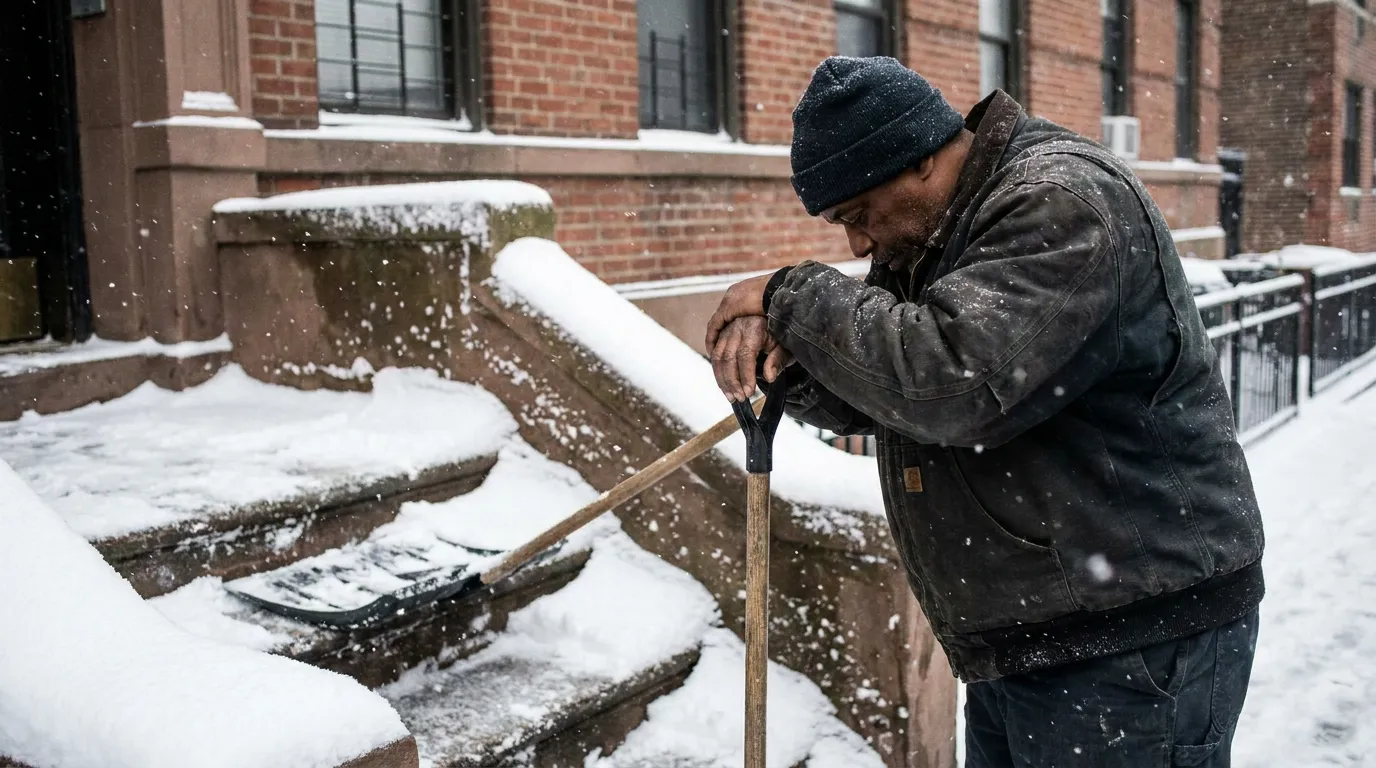
How the Storm in Progress Doctrine New York Courts Apply Actually Works
The doctrine rests on a practical idea: clearing snow during active snowfall would be futile. Landowners are not required to clear snow or ice during an ongoing storm. Once precipitation ends, a reasonable period to remedy the condition begins, with what counts as reasonable depending on specific facts. Local ordinances can inform that analysis: in New York City, the Administrative Code requires abutting owners to clear sidewalk snow within set hours after snowfall stops.
This principle is consistent with New York’s statutory approach. Under CPLR § 9804, which applies to villages, no civil action may be maintained for injuries from snow or ice unless written notice was given to the village clerk and there was failure to remove the hazard within reasonable time. Prior-written-notice requirements vary by municipality, but notice of a specific location and reasonable time to act are consistent themes.
The rule affects liability, not filing deadlines. It determines whether a defendant breached a duty, not how long you have to sue.
When a Storm Counts as "In Progress"
Courts consider certified meteorological data, hourly precipitation records, and testimony about scene conditions. A light lull in a nor’easter does not necessarily end a storm, and freezing drizzle overnight may restart one. The difference between a viable claim and dismissal can be measured in hours.
💡 Pro Tip: Photograph the scene the same day, including surrounding areas, tire tracks, and cleared paths. Images showing already-shoveled nearby areas can undercut a claim that clearing was impossible.
Exceptions That Can Keep a Winter Fall Claim Alive
The doctrine has real limits. Liability may attach where a party undertook snow removal poorly, creating or exacerbating a dangerous condition. In New York City, the Administrative Code shifts sidewalk maintenance responsibility to the abutting property owner, with an exception for owner-occupied one-, two-, and three-family residential properties used exclusively for residential purposes.
Situations that may support a claim despite an active or recent storm include:
- Old ice. A ridge formed days earlier and covered by fresh snow may be treated as a pre-existing condition, provided the plaintiff can show it caused the fall.
- Negligent shoveling. Piling snow so meltwater refreezes across a walkway can create a new hazard attributable to the party who moved it.
- Interior conditions. Tracked-in water in a lobby is analyzed under ordinary notice principles rather than the storm in progress rule.
- Independent defects. A missing handrail, broken step, or unlit stairway may support causation even where the snow and ice theory is weakened.
Even if the doctrine limits the snow and ice theory, an alternative defect may support causation. Under New York’s pure comparative negligence framework in CPLR § 1411, a plaintiff’s carelessness reduces damages in proportion to fault rather than barring recovery. Consult a storm in progress doctrine new york lawyer before accepting the case is over.
What You Still Have to Prove in a Premises Liability New York Case
Beating the storm defense is only part of the burden. Under general premises liability principles explained by the New York City Bar’s slip and fall legal guide, a plaintiff must show the defendant created the dangerous condition, or had actual or constructive notice and a reasonable opportunity to remedy it.
Constructive notice is often where snow removal duty New York cases are won or lost. Constructive notice requires that the condition was visible and existed long enough that a reasonably attentive owner could have discovered and remedied it. Proof may come from prior complaints, building logs, maintenance contracts, or surveillance footage. Video is frequently overwritten within weeks, making prompt preservation letters critical.
Evidence That Tends to Matter Most
Weather records, photographs, and witness accounts carry outsized weight. Certified climatological data from the nearest observation station may establish when precipitation stopped, though courts may weigh it against testimony about conditions at the specific location. Statements from neighbors, delivery drivers, or building staff about how long ice had been present can rebut a storm-created narrative.
Medical documentation should begin immediately and stay consistent. Gaps in treatment invite arguments that the injury was minor or unrelated. Keeping the shoes you wore and any incident report also helps preserve the record.
Deadlines: Where Government Property Changes Everything
The filing clock depends on who owns or controls the property. For private property, slip and fall claims carry three years from the accident under CPLR § 214(5). A wrongful death claim must be brought within two years of death under EPTL § 5-4.1, and where the defendant is a public entity, a timely notice of claim is required.
Claims involving public entities operate on a far shorter schedule. Claims against New York City and most municipalities require a notice of claim within 90 days under General Municipal Law § 50-e and suit within one year and 90 days under General Municipal Law § 50-i. Claims against the State proceed in the Court of Claims, where Court of Claims Act § 10 requires a personal injury claim to be filed and served within 90 days, unless a notice of intention to file is served within that 90 days, which extends the time to file to two years.
| Claim Type | General Deadline | Authority |
|---|---|---|
| Private-property slip and fall | 3 years from the accident | CPLR § 214(5) |
| Other negligence causing injury | 3 years from the accident | CPLR § 214(5) |
| Wrongful death | 2 years from the date of death | EPTL § 5-4.1 |
| NYC and most municipal claims | 90-day notice of claim; suit within 1 year and 90 days | GML §§ 50-e, 50-i |
| New York State claims (Court of Claims) | Claim, or notice of intention, within 90 days; claim within 2 years if notice of intention served | Court of Claims Act § 10 |
These deadlines are not interchangeable. Missing the 90-day notice window can end an otherwise timely claim.
Filing Against the City After an Icy Sidewalk Injury in NYC
When the fall happens on City-owned property, the process begins with the Comptroller. Filing a notice of claim is a legal prerequisite to suing the City, and claimants must wait 30 days after filing before commencing a lawsuit.
Expect the investigation to focus on timing. Claimants may be required to appear at a statutory examination under General Municipal Law § 50-h, which frequently covers exactly when snow started, when it stopped, and what the walkway looked like. If you are early in the process after an icy sidewalk injury in NYC, understanding this sequence helps avoid procedural traps.
💡 Pro Tip: Save your own weather screenshots, transit alerts, and text messages from the day you fell. Contemporaneous messages describing conditions can corroborate your timeline months later.
Practical Steps After a NYC Snow and Ice Fall
What you do in the first days often shapes what a case looks like a year later. Property owner liability for ice usually turns on documentation that is easy to gather immediately and nearly impossible to recreate later.
- Report the fall in writing to the property owner, manager, or agency and request a copy of the incident report.
- Seek medical evaluation promptly and describe the mechanism of injury accurately.
- Identify witnesses and collect contact information.
- Send a preservation request for surveillance video covering the location and time of the fall.
- Avoid recorded statements to an insurer until you understand how the storm timeline affects your claim.
Be prepared for a comparative fault argument. Insurers commonly raise footwear, distraction, or use of an unshoveled path. Under New York’s pure comparative negligence rule, those arguments reduce damages in proportion to the plaintiff’s share of fault rather than eliminating recovery.
Frequently Asked Questions
1. Does the storm in progress doctrine new york courts recognize completely bar my claim?
Not necessarily. It applies only to hazards created by the ongoing storm and does not shield a defendant from liability for pre-existing ice, negligent snow removal, or unrelated defects. Whether it applies is fact-specific.
2. How long after a storm ends does a property owner have to clear snow?
New York law allows a reasonable time after the storm ends, with no universal number of hours. Courts consider the storm’s severity, property type, and local ordinances. Reasonableness is fact-dependent.
3. What is the deadline to sue for a winter slip and fall claim in New York?
Claims against private parties carry a three-year statute of limitations under CPLR § 214(5). Claims against New York City require a notice of claim within 90 days and a lawsuit within one year and 90 days, while claims against the State proceed in the Court of Claims under its own 90-day requirements.
4. Can I recover if I was partly at fault for my own fall?
Recovery may still be possible. New York follows pure comparative negligence under CPLR § 1411, in which a plaintiff’s share of fault reduces recovery rather than barring it.
5. What evidence matters most in a snow and ice case?
Certified weather data, same-day photographs, surveillance video, witness statements, and consistent medical records carry significant weight. Evidence of prior complaints or poorly performed cleanup can also be significant. Much of this material disappears quickly.
Protecting Your Rights After a Winter Fall
The storm in progress doctrine gives property owners breathing room during active snowfall, but it is a narrow, fact-specific defense rather than blanket immunity. Pre-existing ice, careless shoveling, and independent defects may all support a claim, and comparative negligence reduces damages instead of eliminating them. Because the analysis depends on weather timing, ownership, and evidence that fades within weeks, and because government claims carry dramatically shorter deadlines, prompt legal review can make the difference.
If you or a family member was injured on snow or ice in New York City or on Long Island, The Newman Firm is prepared to evaluate the weather timeline, notice issues, and applicable deadlines in your situation. Call (718) 896-2700 or schedule your consultation today to get started.
Disclaimer: This content is for informational purposes only and is not legal advice. Every case is unique, and results may vary. Consult an attorney about your specific circumstances.