

When a Wet Floor Sign Is (and Isn’t) Enough in New York
Key Takeaways: Under New York law, a wet floor sign doesn’t automatically protect a property owner from liability. Whether a warning was adequate depends on the facts, such as where the sign stood, when it went up, whether people could see it, and whether the owner cleaned up the hazard within a reasonable time. New York’s pure comparative negligence rule usually reduces an injured person’s award by their share of fault instead of barring recovery. Many cases turn on notice, meaning whether the owner created the hazard or knew or should have known about the spill. Claims against certain public entities generally require a notice of claim, often within 90 days. Saving photos, witness names, incident reports, and video early can make a real difference.
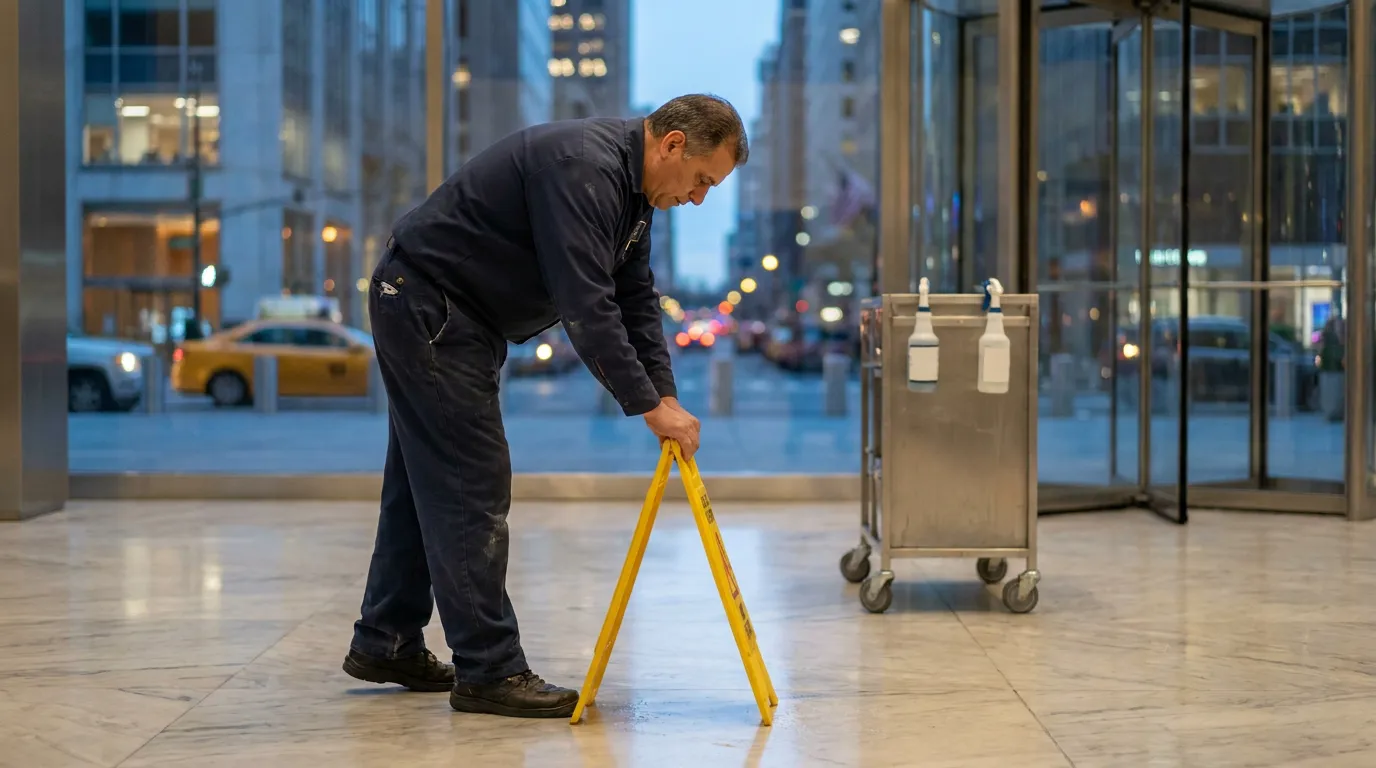
A wet floor sign does not automatically protect a store or property owner from liability under New York law. Whether a warning was "adequate" generally depends on where the sign stood, when it went up, whether people could see it, and whether the owner also took reasonable steps to clean up the hazard. A yellow cone in the wrong aisle, or one put out after someone already fell, may not warn anyone. Even when a sign was in place, a jury may still find that the owner shares fault. In that case the sign usually affects how much the injured person recovers, not whether they can recover anything. In some cases, though, a court may find that a visible, well-placed warning plus prompt cleanup means the owner wasn’t negligent at all.
If you slipped on a wet floor in a store, lobby, or other building in New York City, it can help to have someone look at your claim early. The Newman Firm helps injured New Yorkers understand their options after a fall. Call (718) 896-2700 or contact us now to talk about what happened.
How Duty to Warn Works in New York Premises Liability
Under New York premises liability rules, property owners and businesses generally owe visitors a duty to keep their premises reasonably safe. That duty can include fixing hazards, cleaning spills within a reasonable time, and warning people about dangers that are not open and obvious. A wet floor sign is one way to warn of a hazard, but it is only one part of reasonable care. Even when a hazard is open and obvious, New York courts generally hold that this removes only the duty to warn, not the owner’s separate duty to keep the premises reasonably safe.
These claims are about legal responsibility. Cornell Law School’s Legal Information Institute explains that liability in civil law means legal responsibility for one’s acts or omissions. A slip and fall claim is a civil negligence claim. The focus is on whether the owner failed to use reasonable care and whether that failure caused your injury.
The Four Elements You Generally Must Prove
In most negligence cases, the injured person must prove four elements by a preponderance of the evidence, meaning each is more likely true than not:
- Duty: The owner or business owed you a duty of reasonable care as a visitor or customer.
- Breach: The owner failed to meet that duty, for example by leaving a spill unattended or giving an inadequate warning.
- Causation: That failure caused your fall and your injuries.
- Damages: You suffered real losses, such as medical bills, lost income, or pain and suffering.
Why Notice Matters
Many wet floor cases depend on notice, meaning what the owner knew or should have known. You may show that the owner created the hazard, for example by mopping. You may also show actual notice, where staff knew about the spill, or constructive notice, where the hazard was visible and there long enough that employees should have found and fixed it. Proving notice often turns on surveillance footage, cleaning logs, and employee testimony.
What Makes a Warning Adequate?
Whether a warning was adequate is usually a question of fact, not a checklist. Courts and juries may look at all the circumstances instead of simply asking whether a sign existed. The table below shows factors that may matter.
| Factor | May Support the Injured Person | May Support the Store |
|---|---|---|
| Placement | Sign was far from the spill or out of view | Sign stood directly at the wet area |
| Timing | Sign went up after the fall or long after the spill | Sign went up promptly after the spill |
| Visibility | Blocked by displays, carts, or poor lighting | Clearly visible from the path of travel |
| Cleanup | Spill was left for a long time despite the sign | Staff began cleaning right away |
| Scope | Wet area was larger than the warned zone | Warning covered the entire hazard |
A sign may also fall short if the hazard was larger or more dangerous than the warning suggested. A single cone near a puddle may not warn shoppers that the whole aisle is slick.
💡 Pro Tip: If you can, photograph the floor and any sign from where you fell and from the direction you were walking. Those angles can later show whether you could actually see the warning.
Fighting the Wet Floor Sign Slip and Fall Defense
Stores often raise the sign as their main defense, arguing that the shopper should have seen it and been more careful. New York follows pure comparative negligence under CPLR § 1411, so this argument usually does not end a claim on its own. CPLR § 5041(a) generally requires the court to apply comparative negligence when calculating damages after a verdict.
In practice, if a jury finds you were partly careless, it may lower your award by your share of fault. For example, if a jury finds you 20 percent responsible, your recovery drops by 20 percent. But a store may still argue that a proper warning and prompt cleanup show it wasn’t negligent at all. A related issue comes up when the hazard itself was easy to see. You can learn more in our article on visible hazard claims.
How Evidence Is Gathered in These Cases
New York discovery rules shape how lawyers find out when the floor got wet and when the sign went up. Under CPLR § 3130(1), in a personal injury action based solely on negligence, a party generally cannot serve written interrogatories on another party and also depose that same party without leave of court. Lawyers therefore often rely on depositions of store employees, along with document demands, to establish timing and sign placement.
The same statute adds another limit. It generally bars a party from serving interrogatories and also demanding a bill of particulars from the same party. Stores often record over surveillance video quickly, so preserving it and witness contact information early is important.
Filing a No Wet Floor Sign Lawsuit: Deadlines and Notice Rules
You generally must file within strict time limits, and those limits depend on who the defendant is. Personal injury claims against private businesses generally must be filed within three years under CPLR § 214(5). Claims against public entities usually have much shorter deadlines. Missing a deadline may bar a claim, even when the facts are strong.
Not every wet floor injury in New York City happens inside a private store. For tort claims against the public corporation covered by Private Housing Finance Law § 667, including its subsidiaries and employees, you generally must serve a notice of claim under General Municipal Law § 50-e before filing a lawsuit. That notice is usually due within 90 days after the claim arises. You generally must also start a personal injury action against that corporation within one year and ninety days after the claim accrues.
Don’t Count on the Discovery Rule
Some people assume the clock does not start until they understand their injury, but that is rarely true in a fall case. CPLR § 203(g)(1) applies only when a statute measures the deadline from actual or imputed discovery. A typical slip and fall claim accrues on the date of the fall, so this rule generally does not give you more time to sue.
How Compensation Is Paid in a Wet Floor Case
If a case reaches a verdict, New York law controls how the award is paid after it is reduced for comparative fault. Under CPLR § 5041, past damages and future damages up to $250,000 are generally paid in a lump sum. Future damages above $250,000 are generally paid through an annuity contract in periodic installments.
Many wet floor disputes settle without a verdict, and the parties set the settlement terms. Even after a verdict, CPLR § 5041(f) allows the court, with the consent of the claimant and any liable party, to enter judgment for future damages without following the periodic payment rules. Keeping thorough medical records and following your treatment plan can help show the full value of your losses.
💡 Pro Tip: Ask the store to create an incident report before you leave, and request a copy or write down the report number and the manager’s name.
Frequently Asked Questions
-
Can I still sue if there was a wet floor sign near where I fell?
Possibly. A sign does not automatically defeat a claim under New York law. Its placement, timing, and visibility may all affect whether it was an adequate warning, and comparative negligence may reduce an award rather than eliminate it.
-
What if there was no sign at all?
The lack of a sign may support a claim that the owner breached its duty to warn. You generally still need to show the owner created the wet floor or had actual or constructive notice of it, and that the hazard caused your injuries.
-
How long do I have to file a claim?
It depends on the defendant. Claims against certain public entities, such as the corporation covered by Private Housing Finance Law § 667, generally require a notice of claim under General Municipal Law § 50-e, usually within 90 days, and a lawsuit within one year and ninety days. Claims against private defendants generally have three years under CPLR § 214(5).
-
Will my own carelessness ruin my case?
Not necessarily. Under CPLR §§ 1411 and 5041(a), the court generally applies comparative negligence, which reduces your recovery by your percentage of fault instead of barring it.
-
What evidence should I try to preserve?
Photos of the floor and any sign, witness names, the incident report number, your shoes and clothing, and medical records can all help. Stores often record over surveillance footage quickly, so ask them to preserve it early.
Protecting Your Rights After a Wet Floor Fall
A wet floor sign is one factor in a New York slip and fall case, but it generally does not settle whether the store is liable. Whether a warning was adequate depends on where the sign stood, when it went up, and whether the owner took reasonable steps to fix the hazard. Comparative negligence may reduce an award, and public-entity claims often come with strict early deadlines.
If you were hurt in a fall and want to understand your options, a no wet floor sign lawsuit lawyer at The Newman Firm can review what happened and explain how New York law may apply to you. Call (718) 896-2700 or schedule your consultation today.
Disclaimer: This content is for informational purposes only and is not legal advice. Every case is unique, and results may vary. Consult an attorney about your specific circumstances.