

Understanding When a Small Sidewalk Flaw Can Sink a Slip and Fall Claim
Key Takeaways: Under New York’s trivial defect doctrine, a property owner may avoid liability if the defect that caused a fall is deemed too minor to be actionable, allowing a court to dismiss the case before trial. This common-law rule flows from negligence principles, requiring that the defect represent a substantial factor in causing injury. Courts apply no fixed measurement; instead they weigh the width, depth, and irregularity of the defect alongside the time, place, and circumstances of the fall. The doctrine is only part of the analysis, since duty, breach, causation, and notice requirements all shape whether a claim succeeds. Sidewalk cases against a municipality add hurdles like prior written notice under statutes such as CPLR § 9804, and strict deadlines, three years for private claims or often just one year and 90 days against government entities, can end a case entirely. Preserving photos, witnesses, and medical records early is one of the most effective ways to overcome a triviality defense.
Not every crack or uneven surface that causes a fall will support a lawsuit in New York. Under the trivial defect doctrine new york courts recognize, a property owner may avoid liability if the defect that caused your injury is deemed too minor to be actionable. This doctrine does not automatically defeat a claim, but it is one of the most common defenses raised in sidewalk and floor cases.
If you were hurt in a fall and worry that an insurance company will call your injury the result of a "trivial" flaw, guidance matters. The team at The Newman Firm helps injured New Yorkers evaluate their options. Call us at (718) 896-2700 or reach out through our online contact page to discuss your situation.
What the Trivial Defect Doctrine Actually Means
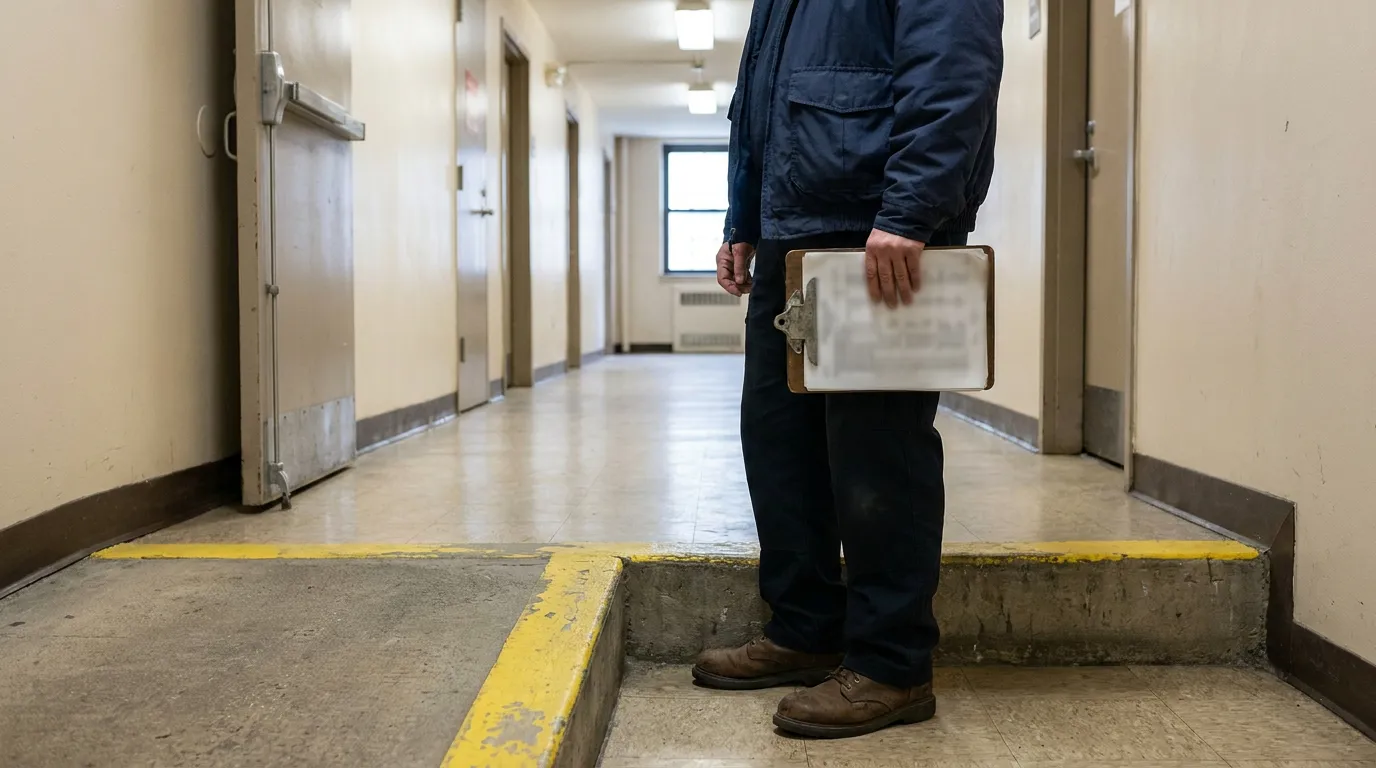
The trivial defect doctrine is a common-law rule that lets a court dismiss a slip or trip case when the alleged hazard is so minor that no reasonable owner would be expected to fix it. To recover, a plaintiff must establish duty, breach, harm, and causation, and a defect deemed trivial can defeat the breach or duty element before a jury weighs the evidence. A defendant must show that, under all the facts, the defect was physically insignificant and did not present a trap or nuisance.
This concept connects to broader negligence law. Courts require proof that the defendant’s act or omission was a substantial factor in causing injury, and that factor cannot be slight or trivial. When a sidewalk imperfection is physically insignificant, a defendant can argue there was no actionable breach. That said, whether a defect qualifies as trivial is highly fact-dependent, and outcomes vary case by case.
How Courts Apply the Trivial Defect Doctrine in New York
When judges weigh a trivial defect defense NY property owners raise, they look at specific facts rather than any fixed measurement. There is no magic number of inches that automatically makes a defect trivial or actionable. Instead, courts examine the width, depth, and irregularity of the defect, along with the time, place, and circumstances of the fall. A small height difference in a dim stairwell during rush hour may be treated very differently from the same gap in an open, well-lit lot.
This analysis mirrors the reasonableness test used in any premises liability New York dispute. Whether an owner breached a duty turns on the foreseeability of harm and the burden of precautions. Cornell’s overview of the elements of negligence explains that primary factors include the foreseeable likelihood and severity of harm and the burden of taking precautions. Because these factors are balanced case by case, a defect that seems minor in a photograph may still be actionable when surrounding conditions made it a genuine trap.
💡 Pro Tip: Photograph the defect from multiple angles with a coin or ruler for scale on the same day as your fall. Because the trivial defect analysis depends on measurements and surrounding conditions, contemporaneous images can be decisive.
Why the Trivial Defect Doctrine New York Plaintiffs Face Is Not the Whole Story
Even when a defect is small, several other rules can determine whether you have a viable New York fall injury claim. Slip, trip, and fall incidents are a subset of premises liability. The core question is: was the owner negligent in dealing with a dangerous condition?
To succeed, an injured person must prove the owner was negligent regarding the hazard. That means showing the owner either created the condition, or knew or should have known about it and failed to fix it, warn of it, or address it. Negligence is the failure to exercise reasonable care under the circumstances. These elements often matter more than the raw size of a defect, which is why a strong evidentiary record can overcome a triviality argument.
The duty owed can also be influenced by your reason for being on the property. New York no longer applies rigid status categories. Instead, a landowner owes a duty of reasonable care under all circumstances, and whether you were a lawful visitor or trespasser is one factor courts weigh in assessing foreseeability and what precautions were reasonable. An unforeseen trespasser is less likely to establish a breach, while a lawful visitor whose injury results from negligence is generally in a stronger position.
Special Rules for Sidewalk Cases Against the Government
Sidewalk trip and fall NYC cases against a municipality carry an extra procedural hurdle. New York’s prior written notice requirement generally bars a claim against a municipality unless the government entity was first given written notice of the specific hazard. For example, under CPLR § 9804, no civil action may be maintained against a village for a defective sidewalk unless written notice was given to the village clerk and the village failed to repair it within a reasonable time. Courts recognize limited exceptions, such as where the municipality affirmatively created the condition.
Responsibility for a sidewalk defect lawsuit NY plaintiffs bring generally follows ownership and control. New York premises law focuses on who is responsible for injuries caused by dangerous conditions. For city sidewalks specifically, liability often shifts to the abutting property owner, a topic explained in our discussion of sidewalk trip and fall NYC rules under the Administrative Code.
Deadlines That Can End a Case Before It Starts
Missing a filing deadline can be more fatal than any triviality defense. In New York, slip and fall claims are personal injury actions governed by CPLR § 214(5), which sets a three-year statute of limitations for filing. Statutes of limitations set how long after an event a case may be started.
Claims against a government agency follow different and often shorter timelines. When suing a government entity, a plaintiff generally must first serve a Notice of Claim, typically within 90 days, and then commence the lawsuit within one year and 90 days. These deadlines are separate from the civil statute of limitations and can be much stricter. The distinctions can be summarized this way:
| Claim Type | General Timeframe | Key Requirement |
|---|---|---|
| Private property injury | Three years from injury (CPLR § 214) | Prove owner negligence |
| Government/municipal claim | Often 1 year and 90 days | Notice of Claim first (usually within 90 days) |
| Sidewalk vs. municipality | Same short window | Prior written notice (e.g., CPLR § 9804 for villages) |
Because deadlines and notice rules interact in complex ways, timing should be reviewed promptly. The New York courts’ statute of limitations timetable shows that civil deadlines range from one year (e.g., assault/battery, libel/slander) to as long as 20 years (e.g., enforcing court judgments), with individual timeframes depending on the specific type of claim and, in some cases, the specific facts involved.
Practical Steps That Strengthen a Fall Injury Claim
Building a record early is one of the most effective ways to counter a trivial defect defense. Because the doctrine hinges on details, thorough documentation can make the difference between dismissal and recovery. Consider these steps:
- Preserve photos, video, and the footwear you were wearing.
- Identify witnesses and request surveillance footage before it is erased.
- Report the incident to the property owner and keep a copy.
- Seek prompt medical treatment and follow through on care.
Anticipating comparative-negligence arguments also helps. New York follows pure comparative fault, so a defendant may argue you share responsibility for not watching where you walked. That does not bar recovery, but it can reduce it in proportion to your share of fault, which is another reason a well-preserved record matters. To learn more about how these cases work, review our overview as an experienced NYC slip and fall lawyer team would approach it.
Frequently Asked Questions
1. Does a small crack automatically make my case worthless?
No. A small defect may still be actionable depending on its depth, location, lighting, and circumstances. Courts weigh these facts individually, so a minor-looking flaw can still support a claim when conditions made it dangerous.
2. How do I know if my defect is "trivial"?
There is no fixed inch measurement. Judges evaluate the width, depth, and irregularity together with the time, place, and surrounding circumstances. An evaluation of your specific evidence is often necessary.
3. What is the deadline to file a slip and fall lawsuit in New York?
Personal injury claims generally have a three-year statute of limitations under CPLR § 214(5). Claims against a government agency often require a Notice of Claim within 90 days and a filing window of one year and 90 days.
4. Who is responsible for a defective public sidewalk?
It depends on ownership and control. Responsibility often shifts to the abutting property owner, and claims against a municipality generally require prior written notice, such as under CPLR § 9804 for villages.
5. Can I still recover if I was partly at fault?
Possibly. New York applies pure comparative fault, which may reduce but does not eliminate your recovery. The final impact depends on how fault is apportioned.
Protecting Your Rights After a New York Fall
The trivial defect doctrine is a real hurdle, but it is only one part of a slip and fall analysis that also includes duty, breach, causation, notice, and strict filing deadlines. A defect that a defendant labels physically insignificant may still be actionable when the surrounding facts and evidence tell a fuller story. Because these cases turn on details and timing, acting quickly to preserve proof and understand your deadlines can make a meaningful difference.
If an insurer is minimizing your injury or calling your fall the result of a trivial flaw, do not navigate it alone. Contact The Newman Firm by calling (718) 896-2700 or by using our secure case review form to discuss your slip and fall NYC claim today.